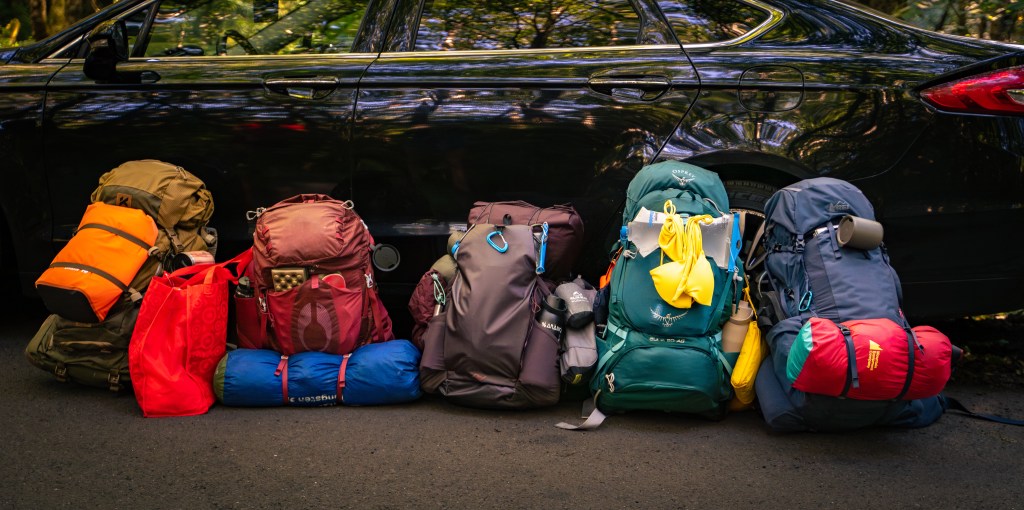
If you’re planning your first backpacking trip, knowing what to pack can feel overwhelming. What do you actually need? What’s worth investing in? And what gear is just extra weight? I finally feel like we perfected our set-up, so I’ve put together this backpacking checklist with the exact gear I use and recommend.
Disclaimer: This post contains some affiliate links, which means I may earn a small commission if you purchase through my links, at no extra cost to you. I only recommend gear I personally use and love, and every click supports me in creating more outdoor adventure content.
This list is beginner-friendly, but it’s also perfect if you’ve been on a few overnight trips and want to refine your setup. I’ve linked the gear we personally use so you can trust it’s been trail-tested.
Main Items:
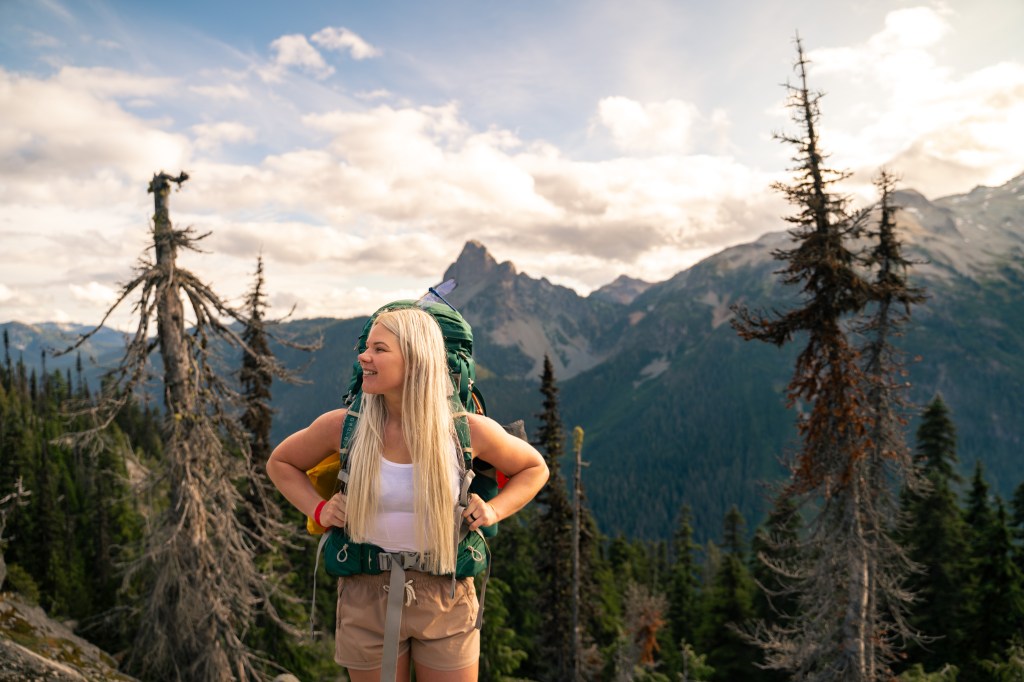
Backpack with rain fly – I love my Osprey Aura AG 50L pack. The exact one I have is not sold anymore, I got mine used from REI co-op for $110. You can also find some steals on FB Marketplace. Whatever pack you choose just make sure it fits you (can get fitted at REI). A good pack can be expensive but it’s worth the money, especially when you’re hiking up a mountain carrying 30+ pounds on your back. Always bring the rain cover because weather changes fast in the mountains and at night moisture can build up.
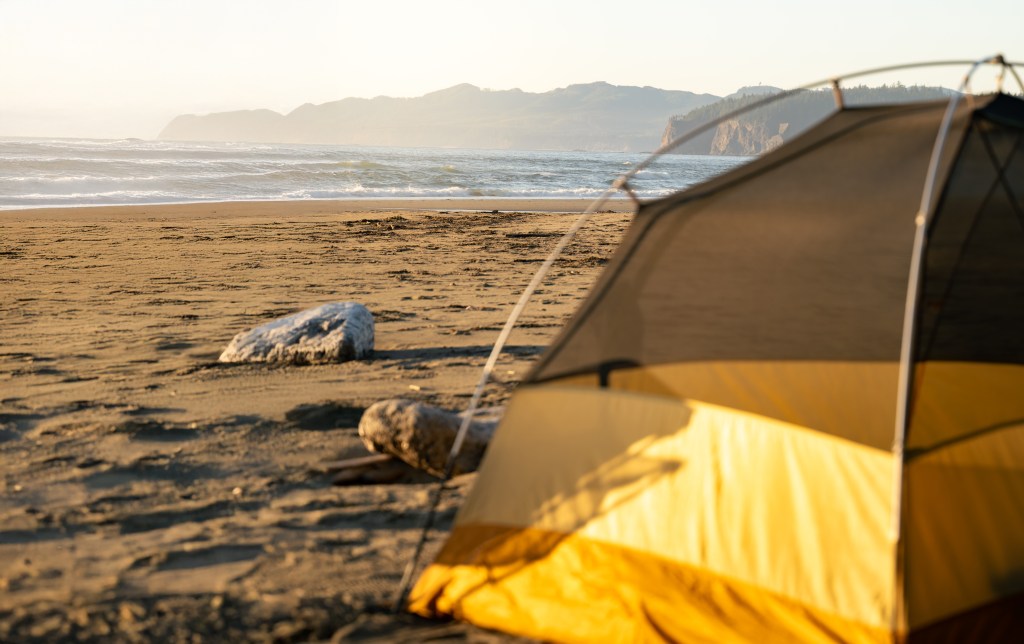
Tent – We have the REI trailmade 2 person tent. I just recommend one that is lightweight, easy to set up, and just big enough for you (and your partner if you’re traveling with someone). Look for something under 4 or 5 lbs if possible.
Sleeping bag – Choose one rated for the coldest temps you expect. We have 30 degree sleeping bags and they worked great for camping in the mountains during the summer. Down compresses smaller and is lighter, but tends to be more expensive.
Sleeping pad – Don’t skimp in this. A good pad makes the difference between tossing all night or waking up actually feeling well rested.
Camp pillow – Packs down very small and worth it for comfort. (Or you can stuff clothes in a dry bag if you want to go ultralight.)
Camp chair – Not necessary, but honestly such a game-changer to comfortably sit around camp. The Helinox Chair Zero is a little less expensive and still great.
First aid kit – Customize yours with the basics plus anything personal (allergies, meds, blister care, tweezers, etc.).

Cookware + Food Essentials:
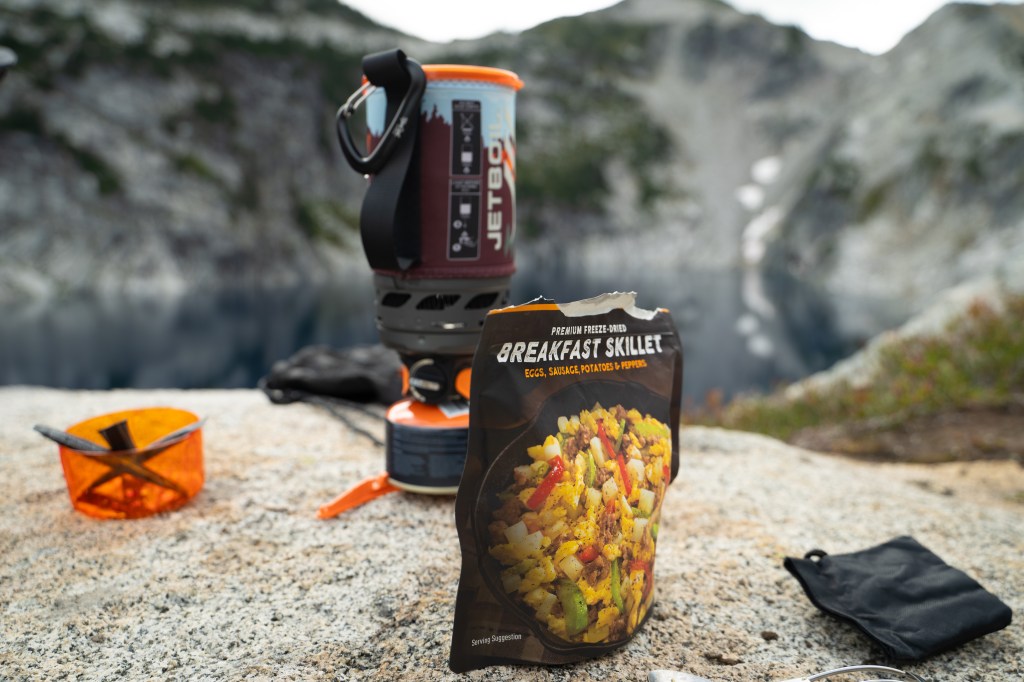
Jetboil – Boils water fast, very easy to use, and lightweight for packing. This one I linked is really only good for boiling water, or cooking inside the cup (coffee, ramen, etc.).
Propane fuel – You can’t fly with it, so plan to buy at your destination if traveling by plane.
Camp silverware – There’s quite a few different options, so just use what works best for you.
Collapsible cups – Not necessary, but can come in handy. Since they pack down so small, I always bring them just in case.
Bear bag – Always store food, toiletries and any other “smelly” products properly and away from your tent. This is the 10L bear bag that we use but the bear canister is also a popular option, just bulkier. Make sure you know how many days you will be out in the backcountry to determine how big of a bear bag/canister you need to fit all of your items. Our 10L bag was perfect for 2 days/nights for 2 people.
Sawyer Squeeze + 2L bladder – Reliable water filter that’s easy to use. Plus the 2L bladder is perfect for extra water storage.
Larq water bottle– My go-to travel bottle for safe, clean water on the go. It uses UV-C light technology to neutralize bacteria and viruses, and also has a built-in filter. I like bringing it backpacking for an extra layer of confidence in water safety but it’s technically not necessary since the Sawyer Squeeze safely filters the water too.
Disinfectant wipes + microfiber cloth to dry – For cleaning dishes and/or yourself.
Camp meals + snacks – Bring a mix of dehydrated meals, trail mix, protein bars, energy chews and whatever keeps you fueled.
Plastic bag for trash – ALWAYS leave no trace. Pack it all out.
Clothing:
Long hiking pants – Durable for trails and extra warmth if it gets cold. I’m obsessed with the way these Prana pants fit and feel. You can adjust the waist too which is a nice feature.
Merino Wool Sun hoodie – Lightweight, breathable, and protects you from UV without having to reapply sunscreen constantly. I always recommend merino wool because it’s a natural fiber and anti-microbial so it doesn’t hold onto smells.
Camp shoes – Something light (like sandals, crocs, outdoor slippers, slip-ons, etc.) to give your feet a break after hiking.
Bathing suit – Only need this if you’re going to lake/body of water and want to swim. I linked my favorite red one-piece that I always get asked about (:
Packable puffer jacket – Definitely recommend having this in case it gets chilly at night, especially in the mountains.
Packable rain jacket – Weather can change fast in the mountains, so it’s worth it to have this just in case.
Beanie + gloves – Even summer nights can get chilly, so I always bring these.
Sleep clothes (merino wool recommended) – I always bring:
- Merino wool sleep shirt
- Merino wool long johns
- Merino wool socks – Bought these for hiking and liked them. However, when you buy Merino Tech sun hoodie, leggings, or some of their shirts, sometimes they automatically give you a free pair of merino wool socks!
Merino keeps you warm, yet still breathable and it doesn’t smell since it’s naturally anti-microbial.
Miscellaneous:
Bug spray (eco-friendly) – Choose one that’s safe for both your skin and the environment.
Sunscreen (natural ingredients) – I use this one and the Sky and Sol brand. They both use clean/non-toxic ingredients which is better for you and for the places we’re exploring. Regular sunscreen with toxic ingredients can do a lot of damage to the environment when it gets into the water.
Portable charger – This one I linked is a little bulky but lasts a long time and has all the cords built in which I love!
Headlamp – Need this for nights at camp. Also always good to bring this for safety in case a hike takes longer than planned and it gets dark.
Mosquito face net – We have yet to use ours since we’ve always lucked out with barely any bugs, but I would always bring this just in case.
Microfiber towel – Quick-drying, packable, and lightweight.
Camp string lights – This was one item that we did not bring on our last backpacking trip but luckily our friends had an extra set for us to use at camp. We will definitely get this for our next backpacking trip. Not really a necessity but it does light your camp up to see better and they’re fun (:
Poop shovel (trowel) – A true leave-no-trace essential when you’re in the backcountry.
Personal Items:
Toiletries bag – Keep it simple but effective. Mine usually includes:
- Deodorant – my personal favorite natural deodorant that I swear actually works is this Primally Pure Charcoal one I linked here.
- Boddi shower in a bottle – this is a cool brand and helps you stay clean when water is scarce. You could also just bring some wet wipes.
- Face moisturizer
- Chapstick
- Small face towels
- Toothbrush & toothpaste
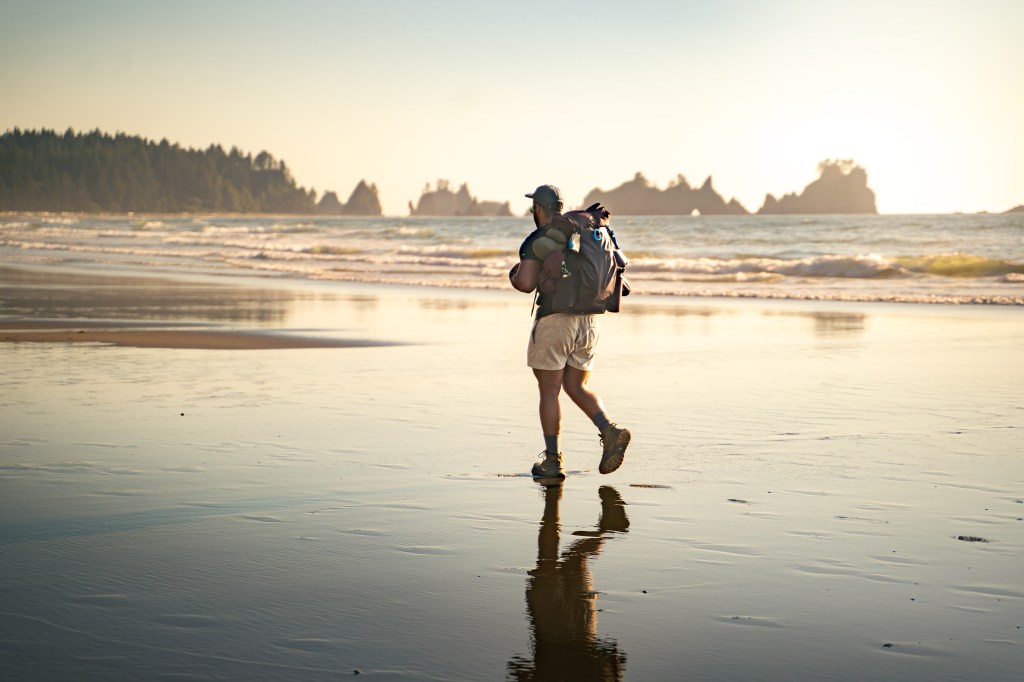
I’ve definitely overpacked and underpacked before, so trust me when I say this list is the sweet spot. It’s everything you need and just enough comfort to make your whole experience enjoyable.
I put together a free packing checklist that you can download here. It has all these items on it so you don’t forget anything!
I hope this helps you pack with confidence for your first (or next) adventure!
Let me know if you have any questions, I’m happy to help!
 Annalise Adventuring
Leave a comment