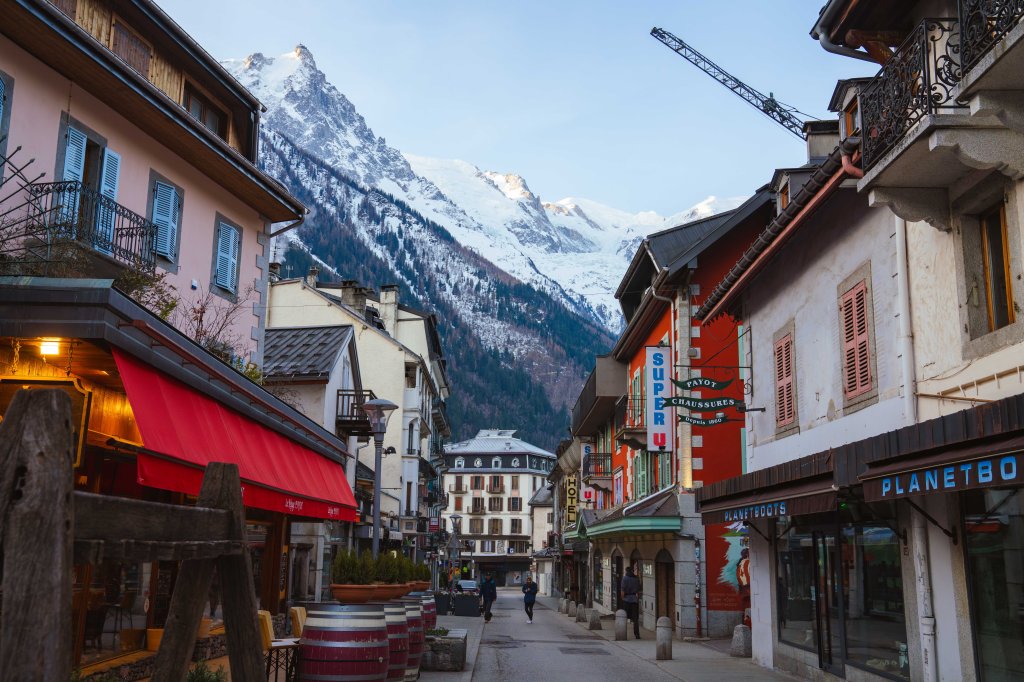
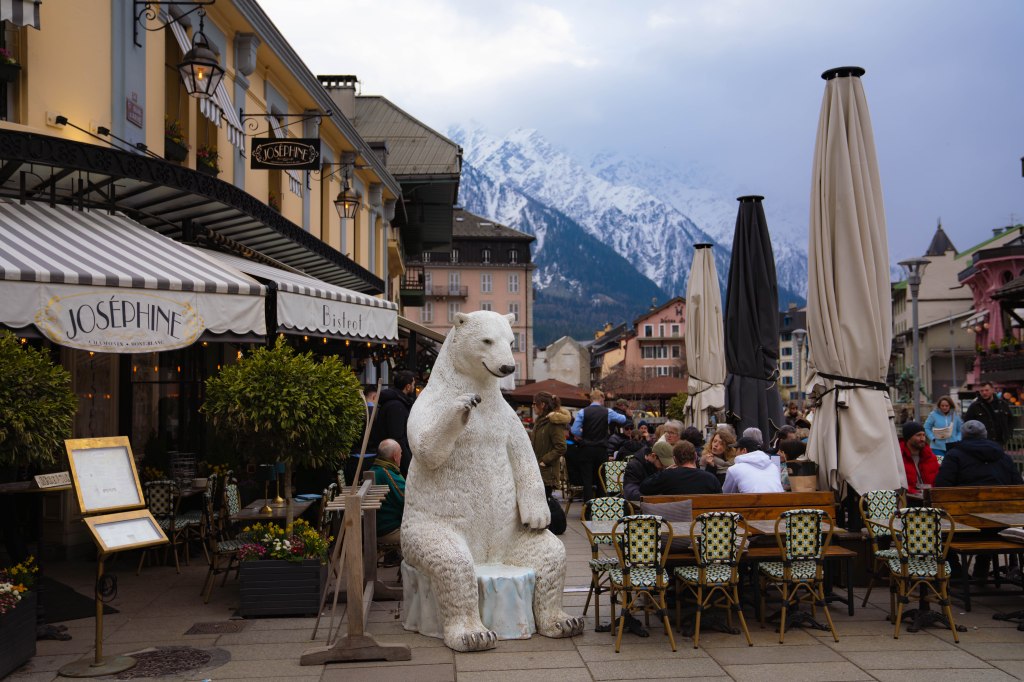
Chamonix is one of the most incredible places you can visit in the Alps, but it’s also very different from your typical ski destination.
At first glance, it seems like a standard mountain town, but once you start planning, you realize how much there is to it. The ski areas are spread out across the valley, there are multiple ways to experience the mountains, and there’s a lot more to do here than just get on the slopes.
My husband and I spent 2.5 days here at the end of our France snowboarding trip, and it ended up being one of our favorite stops. I spent a lot of time planning this part of the trip beforehand, and even with that, there were still a few things I wish I had known going into it.
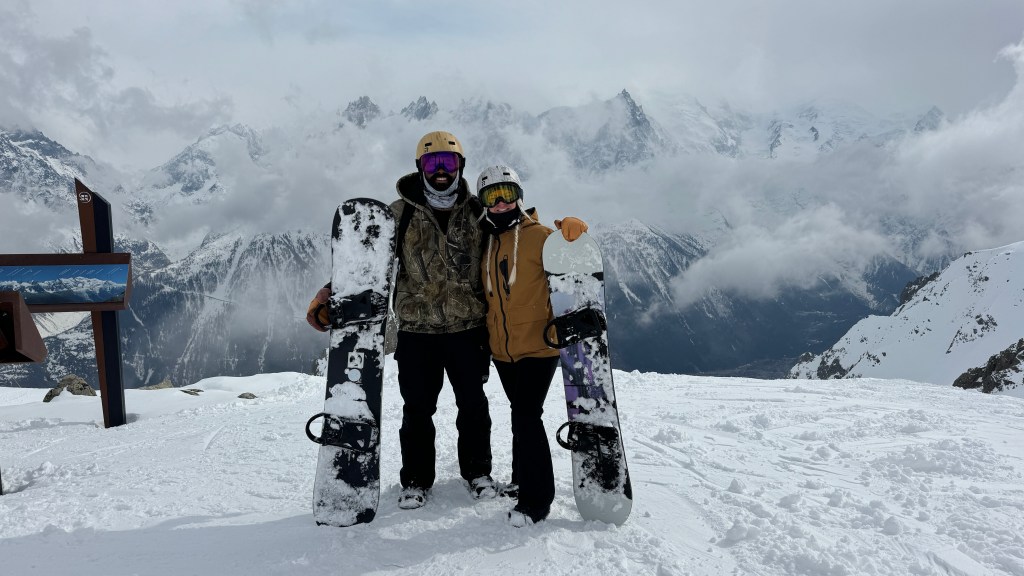
If you’re planning a trip to Chamonix, this guide should give you everything you need to confidently plan your itinerary, from skiing to logistics to where to eat.
What is Chamonix?
Chamonix is one of the most iconic mountain towns in the world. It’s located in eastern France near the borders of Switzerland and Italy, and sits right at the base of Mont Blanc, the tallest peak in Western Europe.
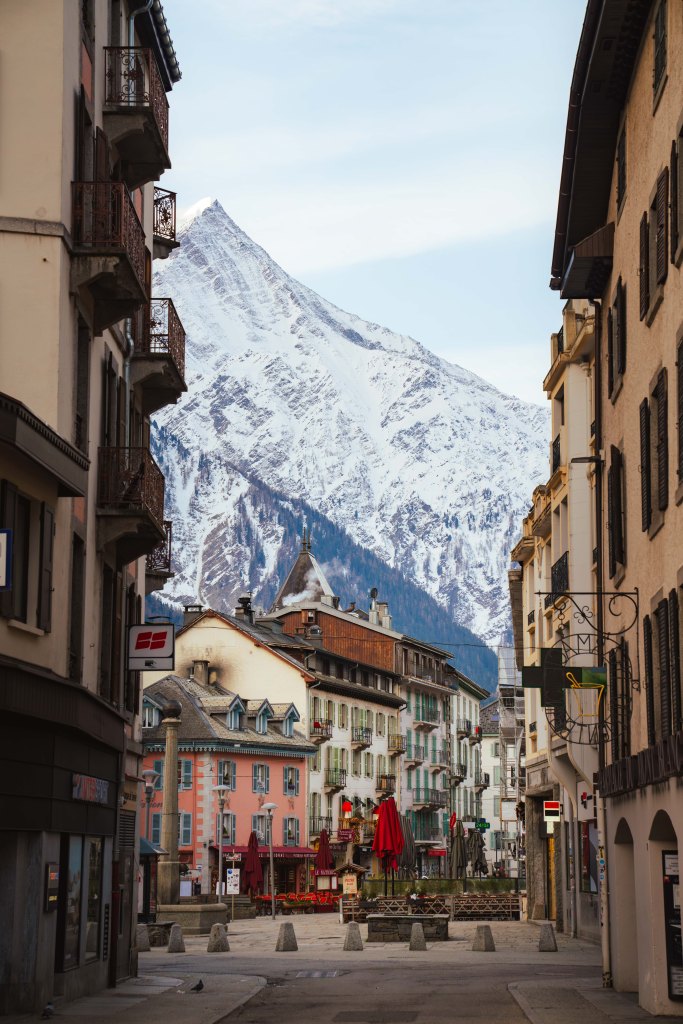
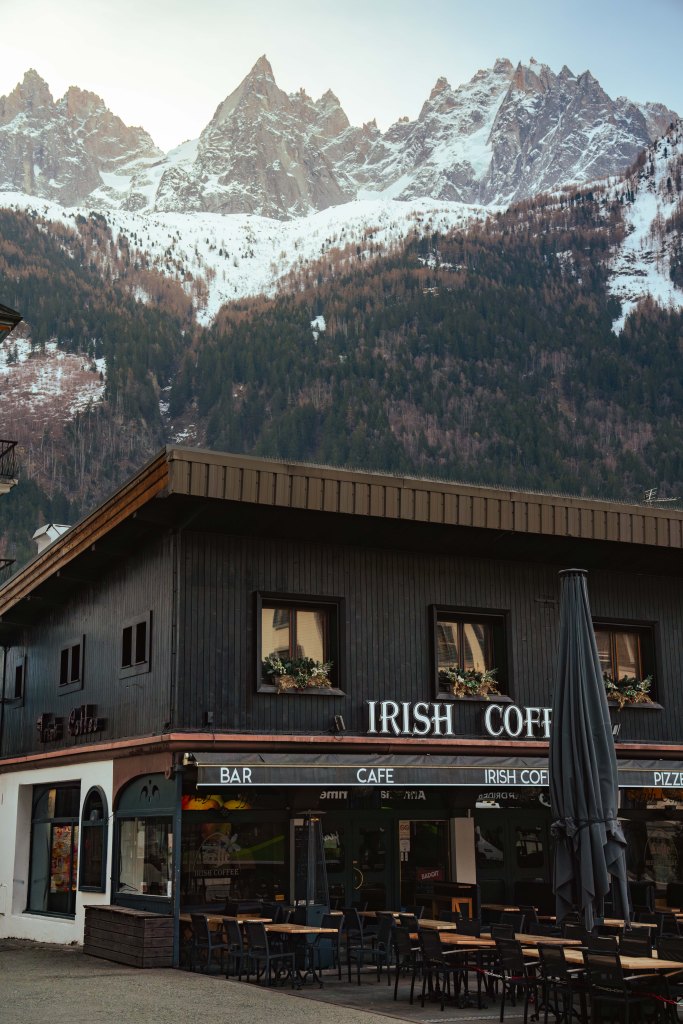
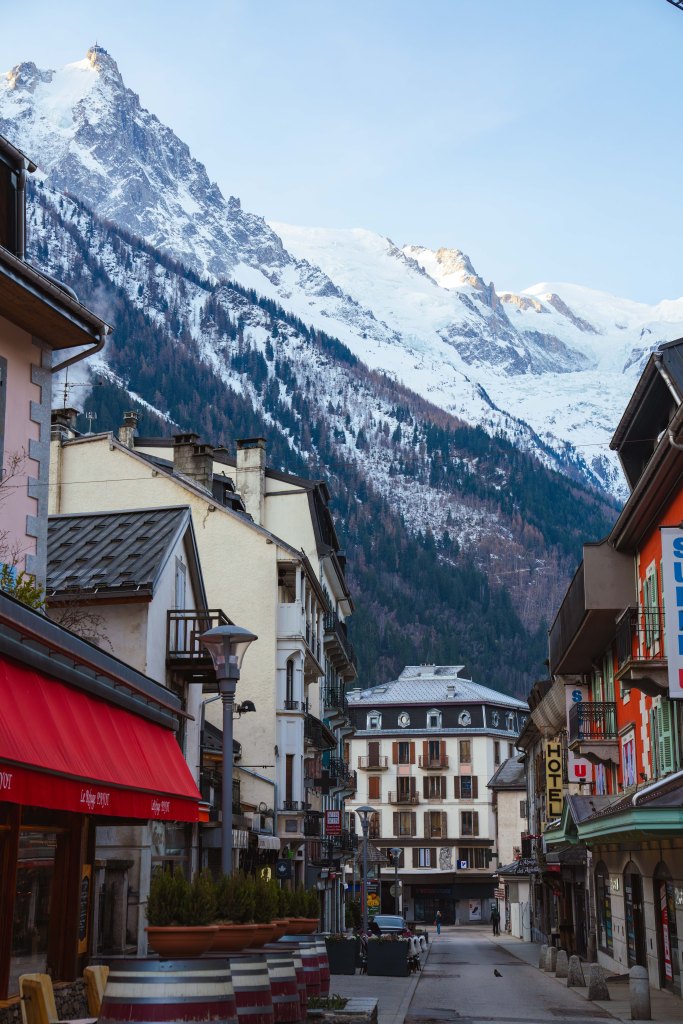
It hosted the first Winter Olympics in 1924 and is known as one of the birthplaces of modern mountaineering, which you can feel the second you arrive. Everything here revolves around being outside, whether that’s skiing, climbing, hiking, or just taking in the mountains that surround you in every direction.
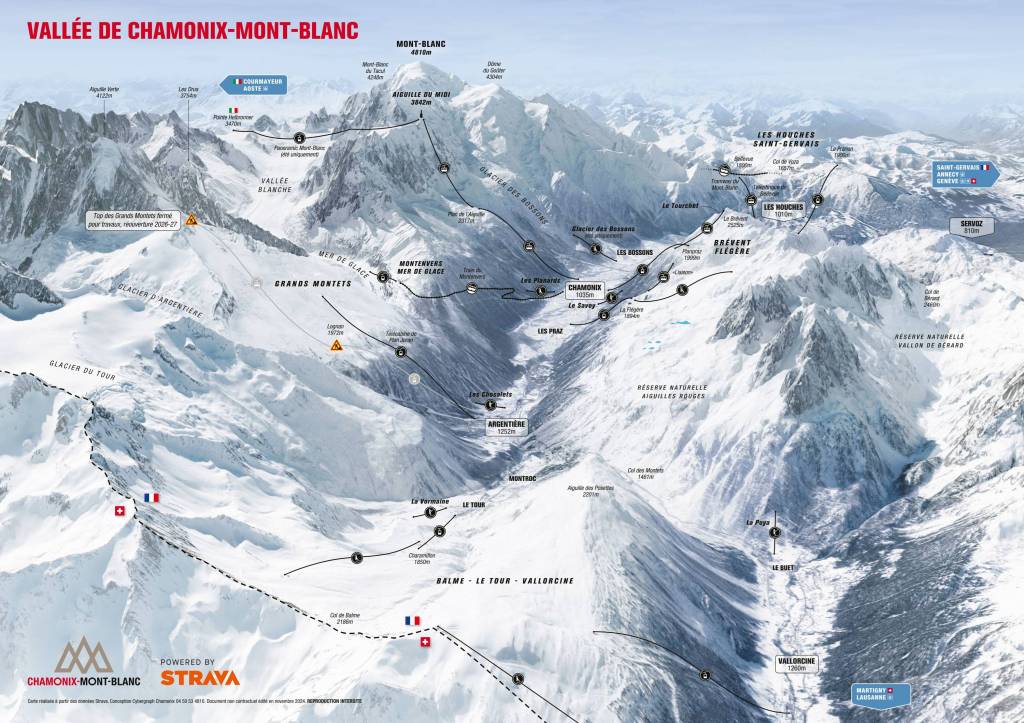
One of the most important things to understand before visiting is that Chamonix is not a single, connected ski resort. It’s a full valley made up of multiple ski areas, villages, lifts, and transportation systems. That’s what makes it so unique, but it’s also why having a plan ahead of time makes a big difference.
How to Get to Chamonix
The easiest way to get to Chamonix from the US is by flying into Geneva Airport.
From there, we took a bus directly to Chamonix that I booked through BusBud:
- Travel time: about 1 hour 40 minutes
- Cost: about $44 round trip per person
This was honestly very convenient and I would 100% do it again. There are also private transfers and rental cars, but unless you specifically want a car, the bus is the most efficient option.
Where to Stay in Chamonix
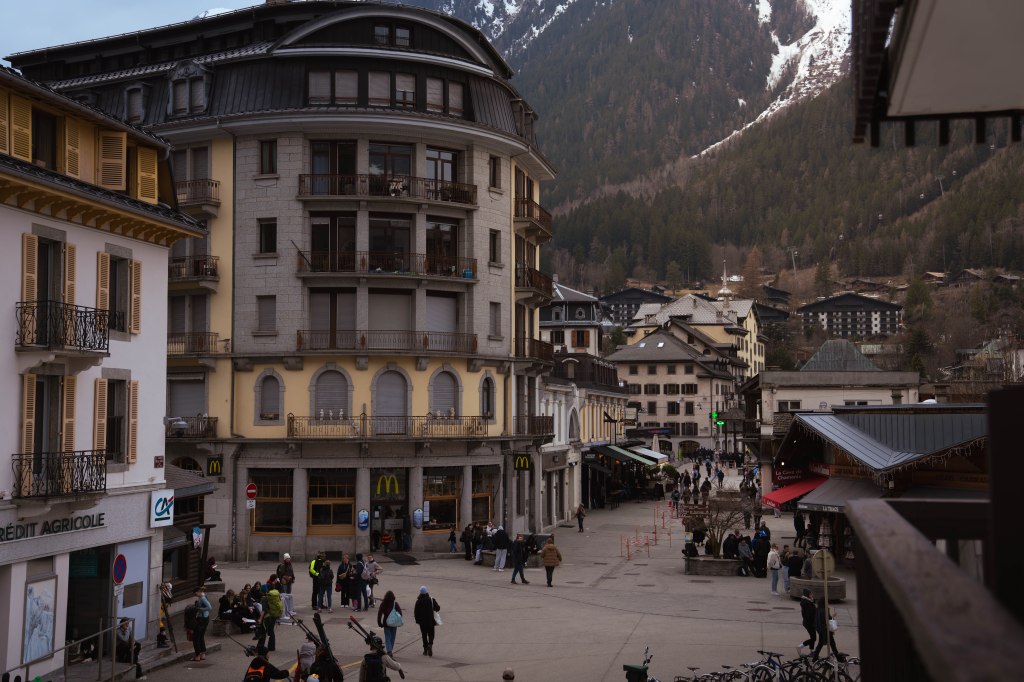
We stayed at The Pointe Isabelle Hotel and overall really liked it. This hotel was right in the middle of downtown. It had a nice restaurant and bar attached. The ski locker room downstairs was really nice and to top it off, it had a beautiful sauna that was open from 8am to 10pm (perfect after a day on the slopes).
The only downside was that our balcony faced the main street, so it was a little loud at night on the weekend. By Monday, it quieted down a lot.
Location matters more than you think
Chamonix is very walkable, but once you add luggage and snowboard gear into the mix, it feels a little different.
The main transportation hub is Chamonix Sud Bus Station. This is where you’ll be dropped off and picked up for transfers to and from the Geneva airport, and where you’ll catch buses to places like Courmayeur, Italy. There are also smaller bus stops throughout town for getting around Chamonix.
Our hotel was about a 15-minute walk from Chamonix Sud, which normally wouldn’t be a big deal, but dragging all of our luggage and snowboard gear made it feel a lot longer, especially early in the morning when we were heading back to catch our bus.
Looking back, I would probably stay a little closer to Chamonix Sud, mainly just to make that arrival and departure easier. It’s still close to town and right next to the Aiguille du Midi gondola, so it’s a really convenient area without feeling far from everything.
Skiing & Snowboarding in Chamonix
Chamonix is famous for skiing and snowboarding, but this is the most important thing to understand before you go: this is not one single, connected ski resort.
Instead, it’s a valley made up of multiple separate ski areas, so you’ll need to decide which mountains you want to ski ahead of time. That’s part of what makes it so unique, but it also means planning before your trip makes a big difference.
Lift Pass Options in Chamonix
Before getting into the ski areas, it’s worth quickly understanding the lift pass options, because this will shape how you plan your trip.
- Chamonix Le Pass: Covers the main ski areas within the Chamonix Valley like Brévent-Flégère, Balme, and Les Houches. This is a good option if you plan to stay within Chamonix and keep things simple.
- Mont Blanc Unlimited Pass: Covers everything in the valley plus areas outside of Chamonix, as well as additional experiences.
- There are also smaller passes if you’re only skiing one area or are just starting out.
We chose the Mont Blanc Unlimited Pass, and I’m really glad we did. It gives you access to a lot more than just the main ski areas, which I’ll break down below, and it gave us the flexibility to explore beyond just one part of the valley.
Mont Blanc Unlimited Pass: What You Actually Get Access To
This pass gives you access to ski areas across France, Italy, and Switzerland, plus several non-ski experiences.
Chamonix Valley Ski Areas
Brévent & Flégère
This is one of the most popular areas in Chamonix and where we spent our first day.
Brévent is accessed from the main town, while Flégère is accessed from Les Praz, and when you’re on the mountain, the two are connected by lifts, which makes it one of the easiest areas to turn into a full ski day without needing to move around the valley.
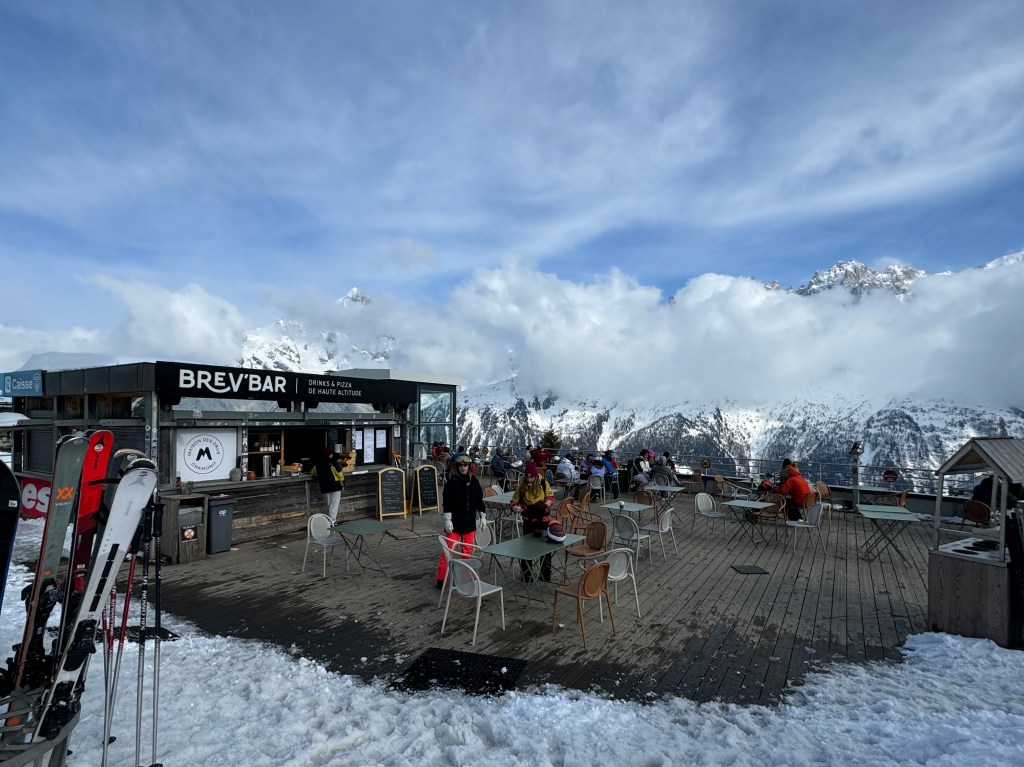
From downtown Chamonix, it’s about a 15-minute walk to the Brévent gondola. We spent the first half of the day riding Brévent, then took the lifts over to Flégère for the afternoon. At the end of the day, we made our way back to Brévent, grabbed a quick après drink, and then headed back down into town.
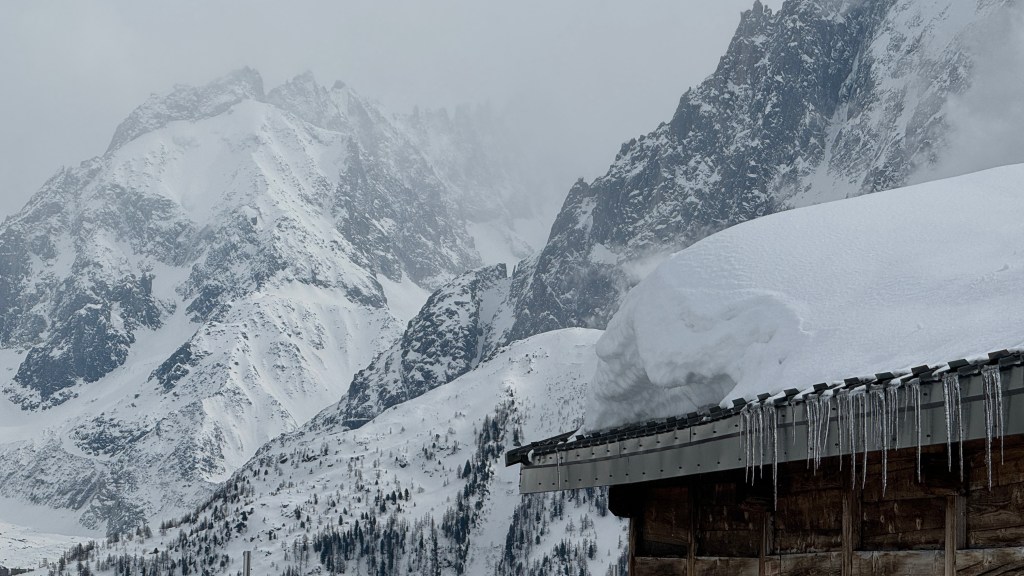
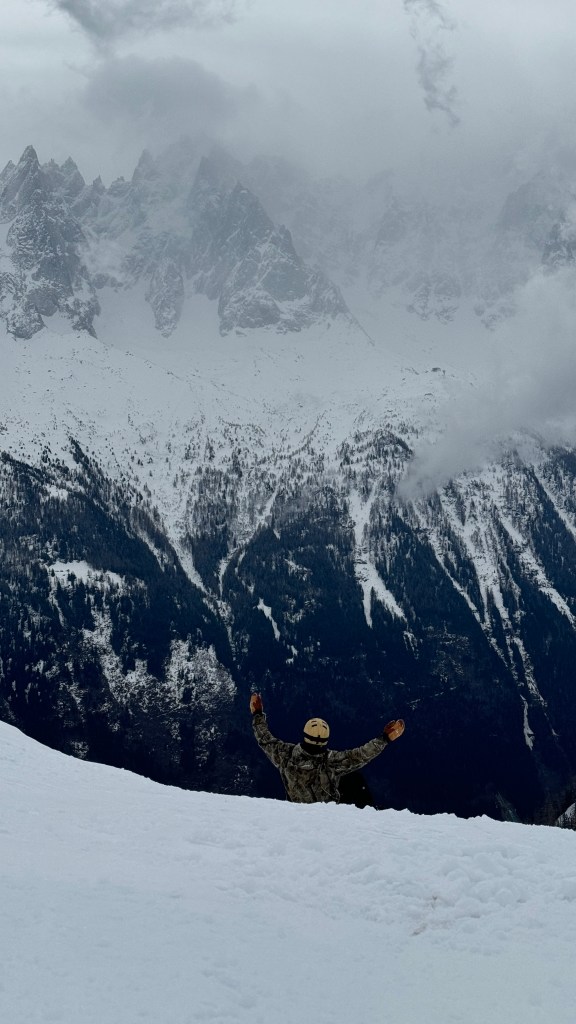
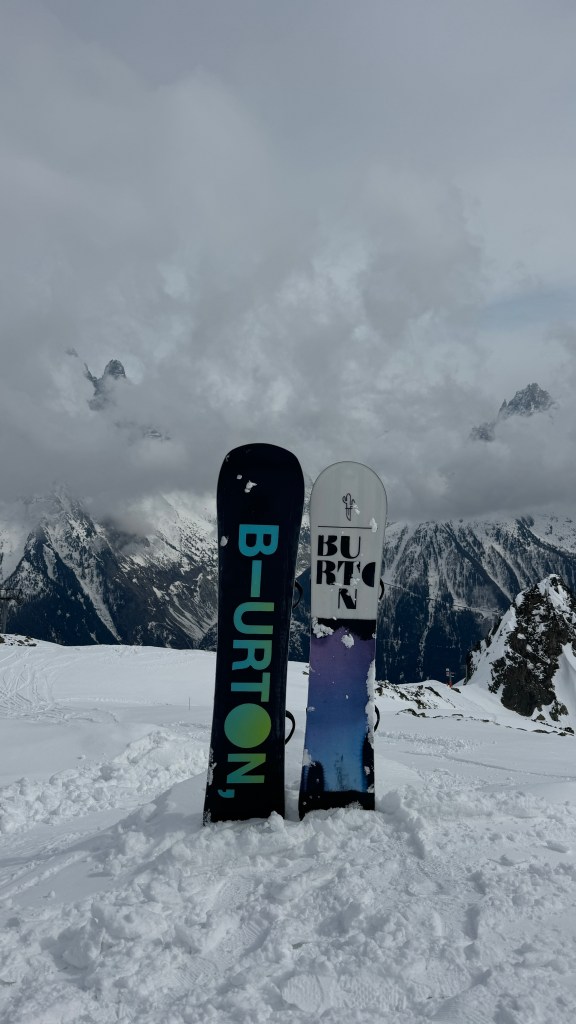
This area is best known for intermediate terrain and some of the best views of Mont Blanc. Even though it was a little cloudy when we went, the views were incredible! It honestly felt a little distracting while riding because everywhere you look is just unreal.
Grands Montets
This is the more advanced and freeride-focused area in Chamonix.
It has steeper terrain, more off-piste options, and generally better snow conditions due to its higher elevation. This is where more experienced skiers and snowboarders tend to go.
One thing to know is that the top/summit lift is not currently fully accessible, so the full vertical experience is limited compared to what it used to be. Still, if you’re an advanced rider and conditions are good, this is a great option.
Vallée Blanche
This is one of the most iconic ski experiences in the world, but it’s completely different from the other areas.
Vallée Blanche is an off-piste glacial route that starts from Aiguille du Midi and takes you through high alpine terrain all the way down toward the valley.
It’s not a marked run and requires proper gear, knowledge of glacier travel, and usually a guide. The Mont Blanc Unlimited Pass includes access to Aiguille du Midi, which is what makes this possible.
This is more of a bucket list experience than a typical ski day, but if you’re experienced and conditions are right, it’s something Chamonix is known for. There are local guides and companies in Chamonix where you can hire a guide.
Balme / Le Tour / Vallorcine
This area is located at the far end of the valley and has a completely different feel from the other mountains.
It’s known for wide, open runs and more forgiving terrain, making it a great option for beginner to intermediate riders. It’s also usually a bit quieter, which makes for a more relaxed day.
If you want something less intense but still really scenic, this is a great choice.
Les Houches / Saint-Gervais
This area sits lower in elevation and is best known for beginner-friendly terrain and tree-lined runs, which are also really helpful when visibility is bad higher up in the mountains.
This is a great option if you’re newer to skiing or snowboarding, or if you want an easier day.
Beginner Areas
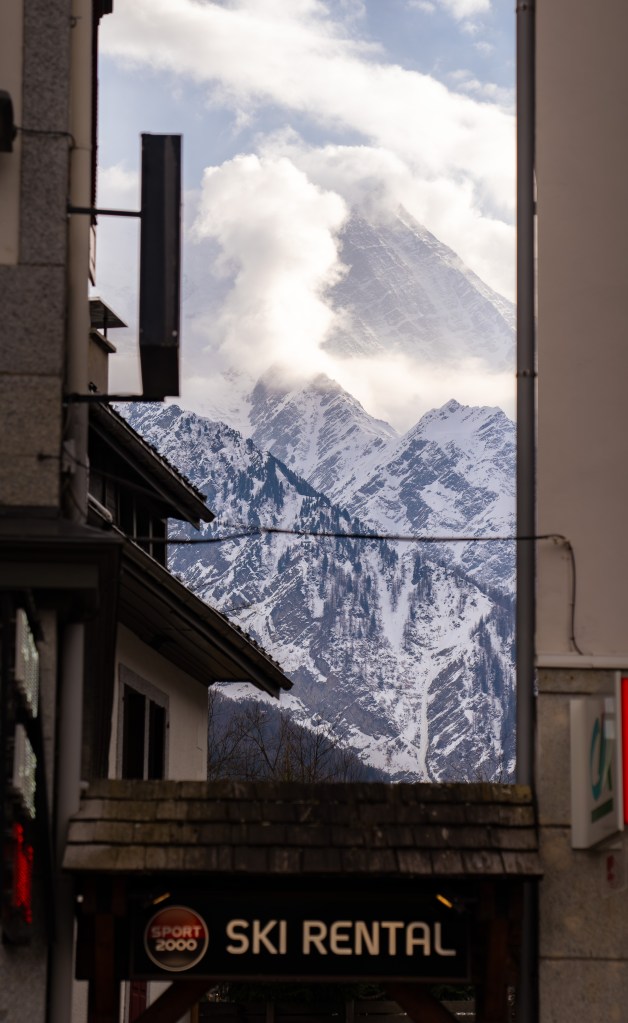
There are also several smaller beginner zones throughout the valley, like La Vormaine, Les Chosalets, Le Savoy, and Planards.
These are ideal if you’re just starting out or want a low-pressure place to practice without committing to a full mountain day.
Ski Areas Outside of Chamonix
One of the best parts of the Mont Blanc Unlimited Pass is that it lets you explore beyond Chamonix.
Courmayeur, Italy
This is where we went on our second day, and it ended up being one of the highlights of our trip.
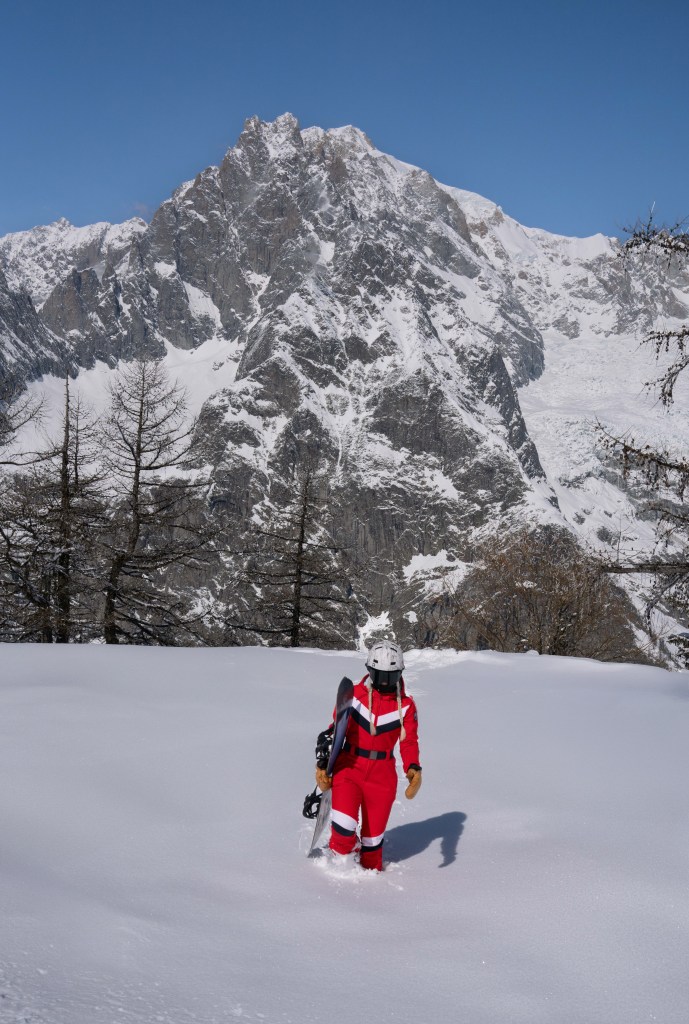
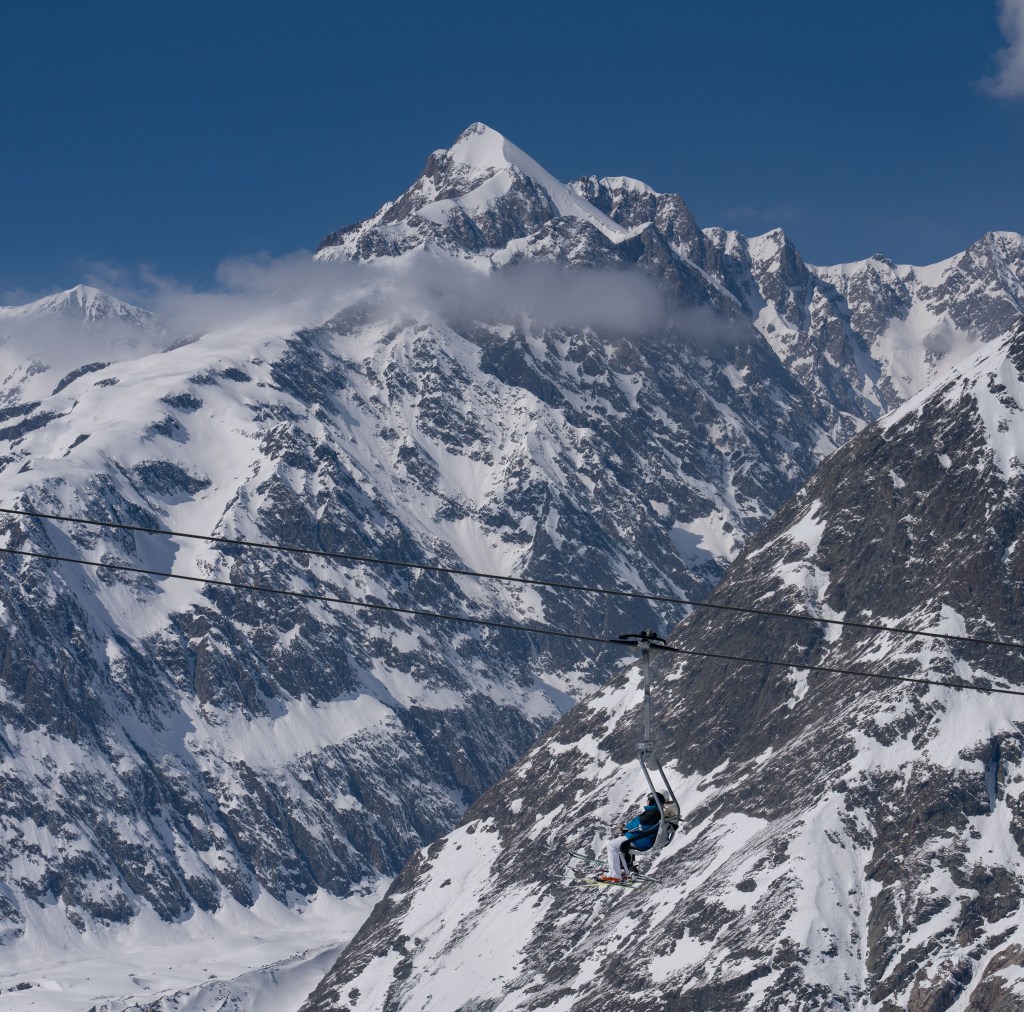
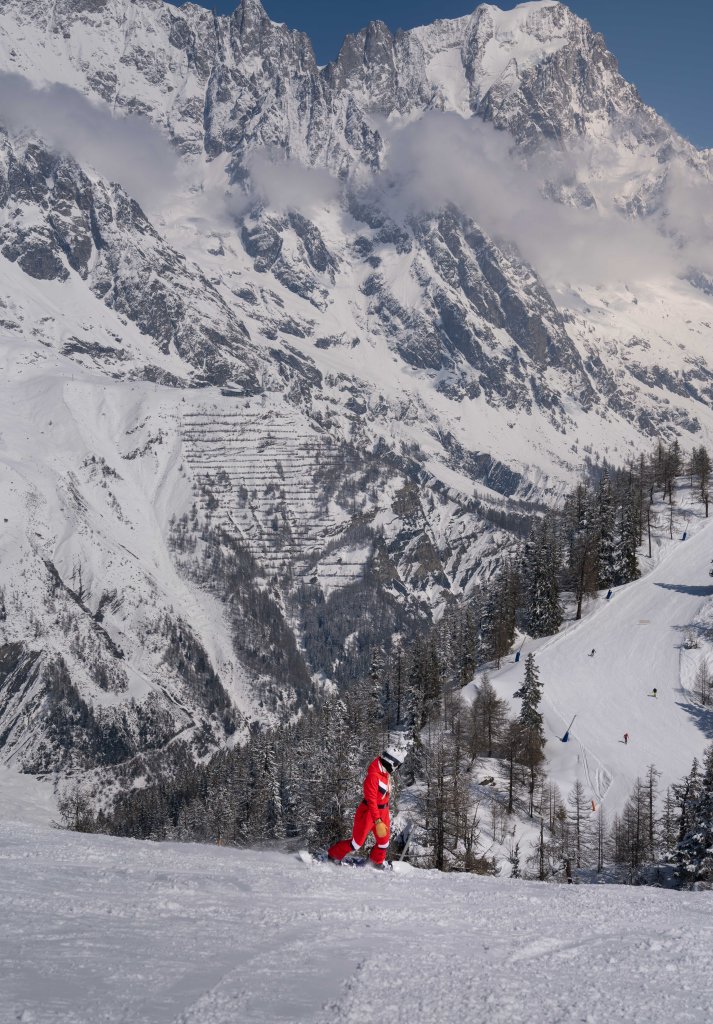
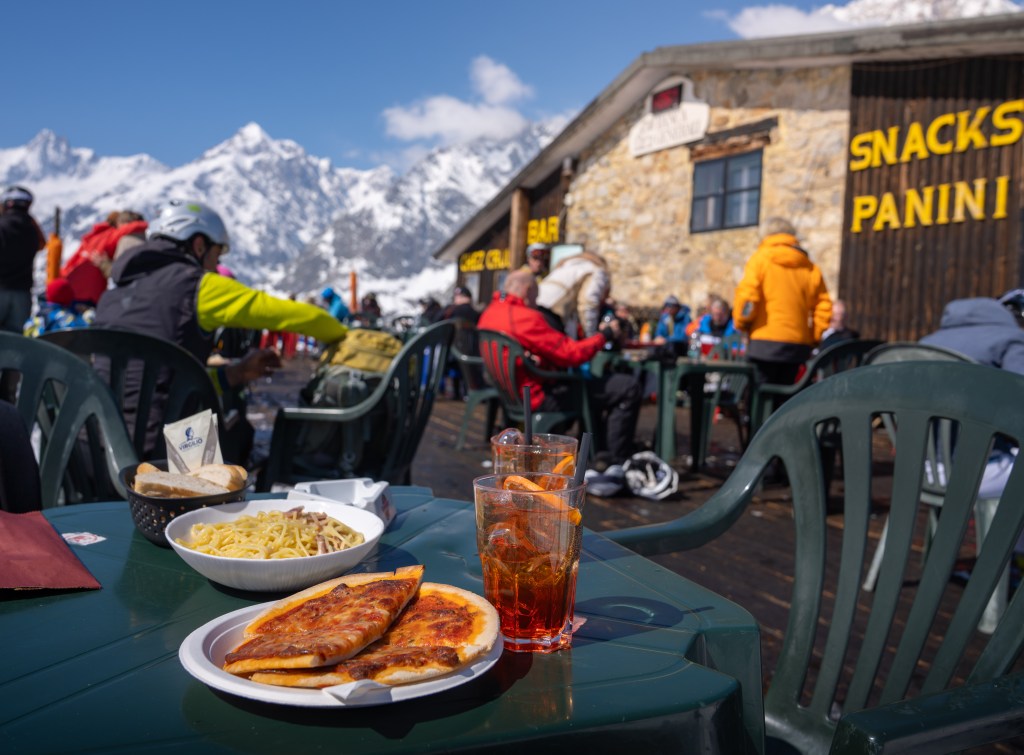
Courmayeur sits on the Italian side of Mont Blanc. The runs are smooth, the mountain views are insane, and it’s noticeably less crowded. And honestly, the food and prices alone make it worth going.
There are a couple of things to plan ahead for. You do need to activate your Mont Blanc Unlimited pass at the counter for Courmayeur, so don’t assume you can just show up and scan through. To get there, you’ll take a bus through the Mont Blanc tunnel, and you need to book this in advance. I recommend using the app Busbud and reserving this at least a day ahead since there are only a few buses in the morning and afternoon and they do fill up.
Also, this is important: there are two bus stops in Courmayeur, one near the gondola and one in the main town. Make sure you double-check which one your return bus is picking you up from. We went back to the stop where we were dropped off, but our return bus was actually picking up in the main town, which was about a 40-minute walk away. We ended up missing it and had to wait 3 hours for the next available bus.
But honestly, getting stuck in this cute Italian town ended up being one of the highlights of our trip.
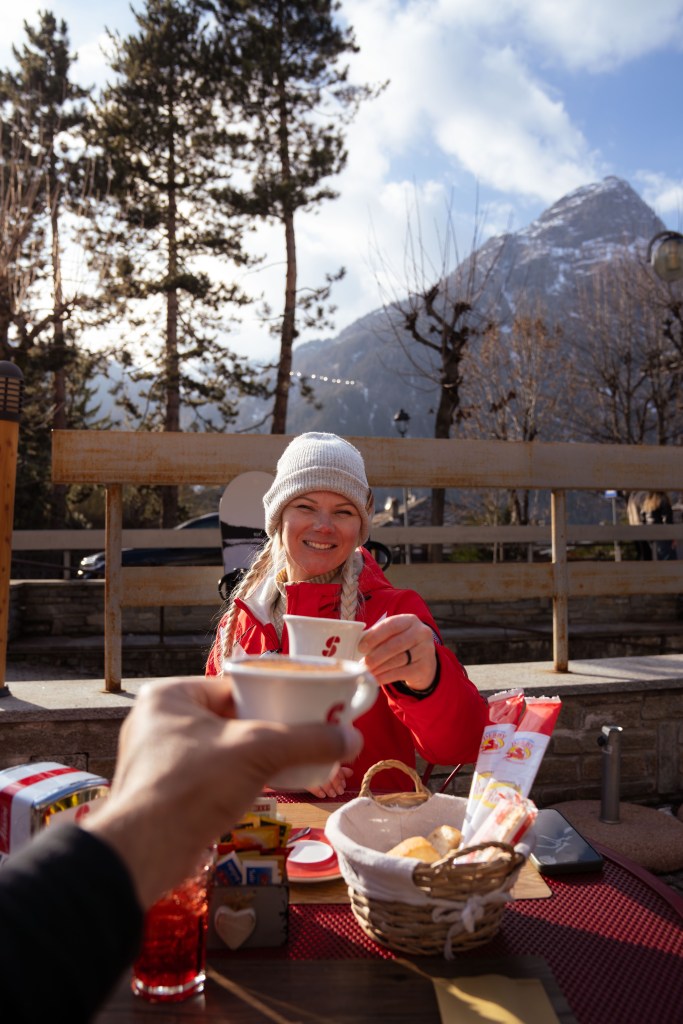
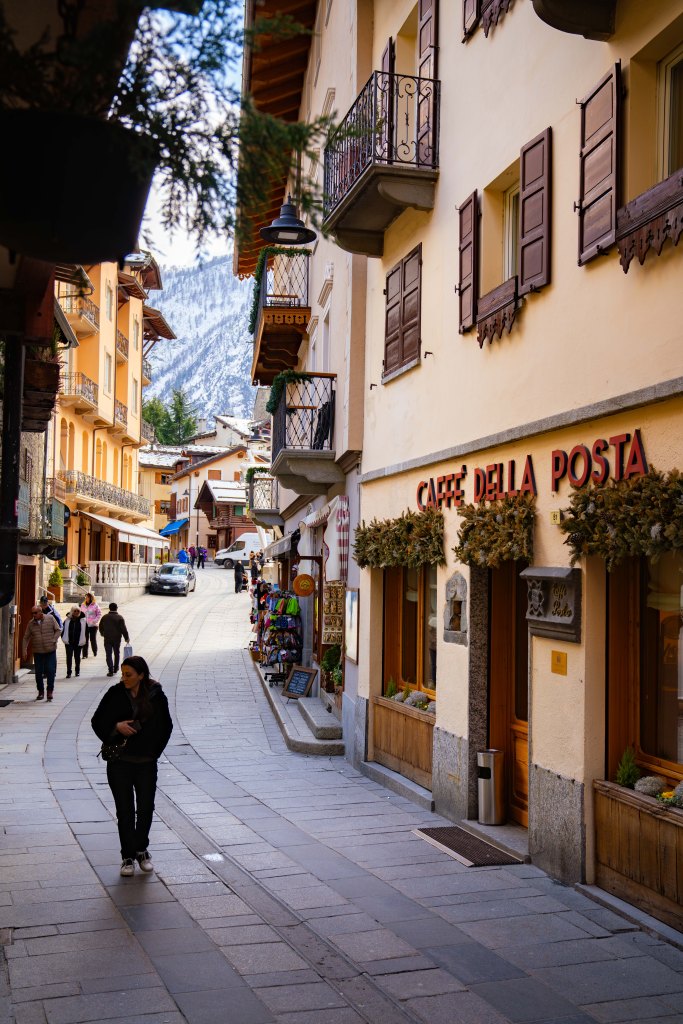
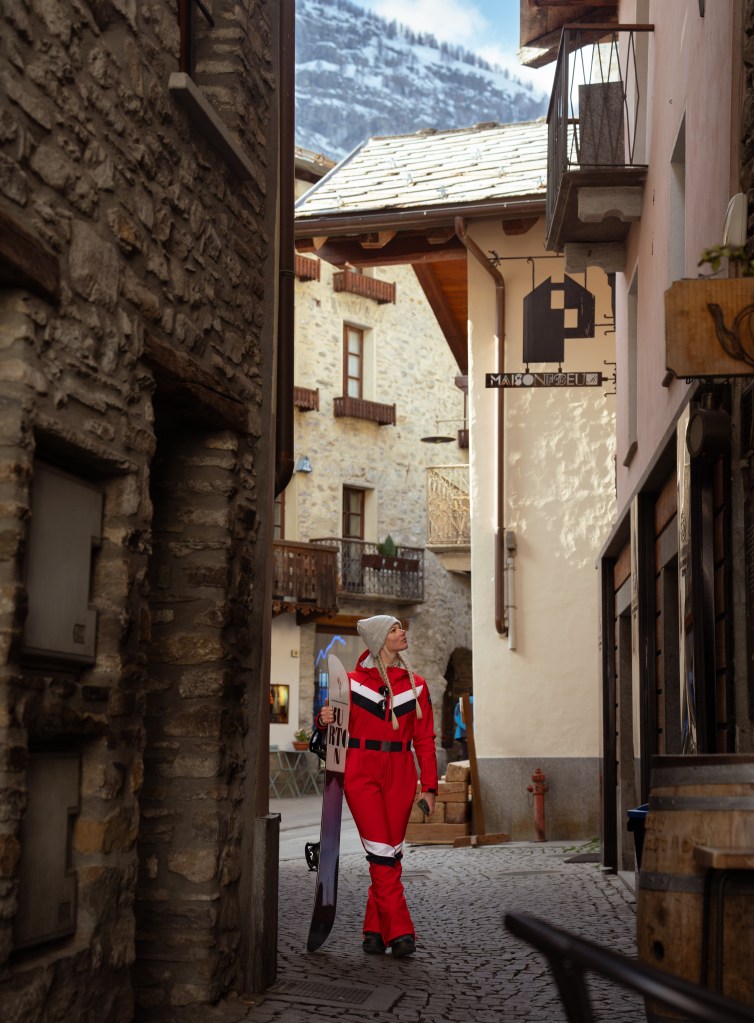
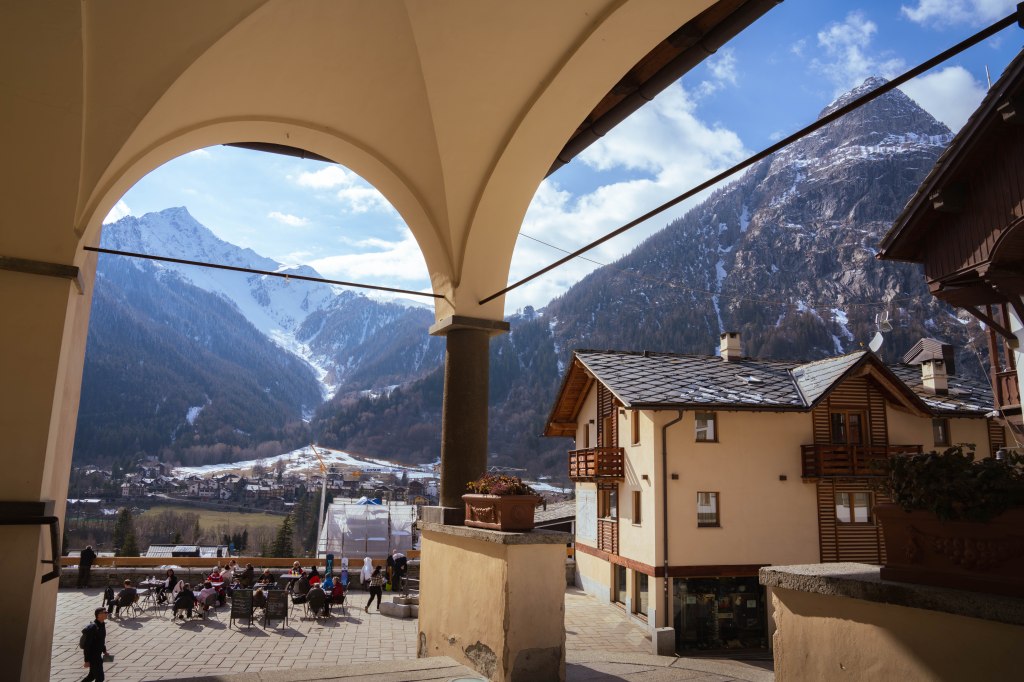
I would definitely recommend planning a full day here. The main town is really walkable with great restaurants and shops, and it’s noticeably cheaper than Chamonix, which was a nice bonus.
Megève / Evasion Mont Blanc
This is a much larger ski area about 45 minutes to an hour from Chamonix with a more traditional, fully connected resort feel.
It has a wide mix of terrain for all ability levels and is more straightforward than Chamonix since you can stay on one mountain system.
To get here from Chamonix, you’ll typically take a regional bus or train with a transfer, usually through Sallanches. The easiest way to plan this is by using SNCF Connect or Google Maps, which will show the best route in real time. Most routes combine a train or bus from Chamonix to Sallanches, followed by a short connection into Megève.
You can also check bus operators like FlixBus, but options are more limited compared to other routes, so it’s something you’ll want to plan ahead.
Crans-Montana, Switzerland
This is another large ski area included with the pass, located in Crans-Montana in Switzerland, about 2.5 to 3 hours (depending on connections) from Chamonix.
It’s known for wide, open terrain, sunny slopes, and more of a classic resort feel compared to Chamonix. It’s a great option if you are looking for a more relaxed, groomed ski experience.
Getting here takes more planning. From Chamonix, you’ll typically take a train or bus with a couple of transfers, usually connecting through places like Martigny or Sion in Switzerland. The easiest way to map this out is using SNCF Connect or Google Maps, which will show the best route in real time based on schedules.
Because of the travel time and transfers, this is better suited if you are planning to spend a full day (or even overnight) there.
Excursions Included with the Mont Blanc Unlimited Pass
One of the best parts of the Mont Blanc Unlimited Pass is that it includes several non-ski experiences, which can be really fun if you want a rest day from skiing or just want to experience something else.
Just keep in mind that some of these require reservations, depend heavily on weather, or may be limited based on the number of days on your pass. Always double-check opening times and reservation requirements before your trip.
Aiguille du Midi
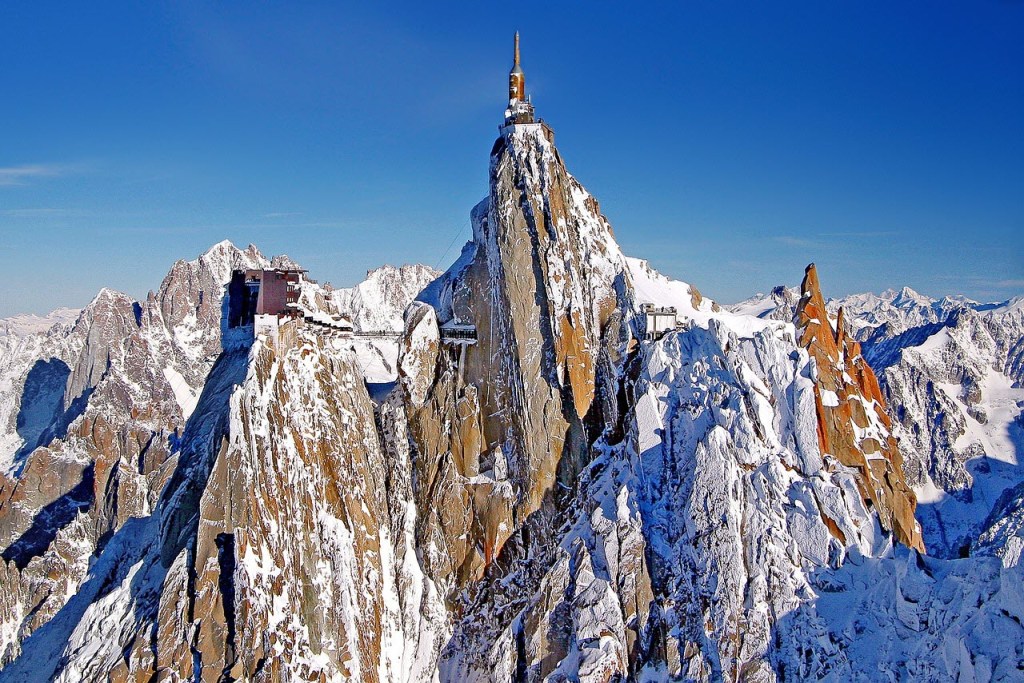
This is one of the most iconic things to do in Chamonix and probably the top sightseeing experience if you only have time for one.
The cable car leaves from Chamonix and takes you up to over 12,000 feet, where you get panoramic views of Mont Blanc and the surrounding Alps. At the top, you’ll find multiple viewing terraces, a glass skybox called “Step Into the Void,” and even a small café where you can grab a coffee while taking in the views. This is also where skiers access Vallée Blanche.
If you have the Mont Blanc Unlimited Pass, access is included, but you still need to reserve your date and time slot. This is compulsory, so do not wait until the last minute. I would plan for at least 2 to 3 hours total, and ideally go earlier in the day when visibility is usually better (morning = clearer skies).
Montenvers Train & Mer de Glace
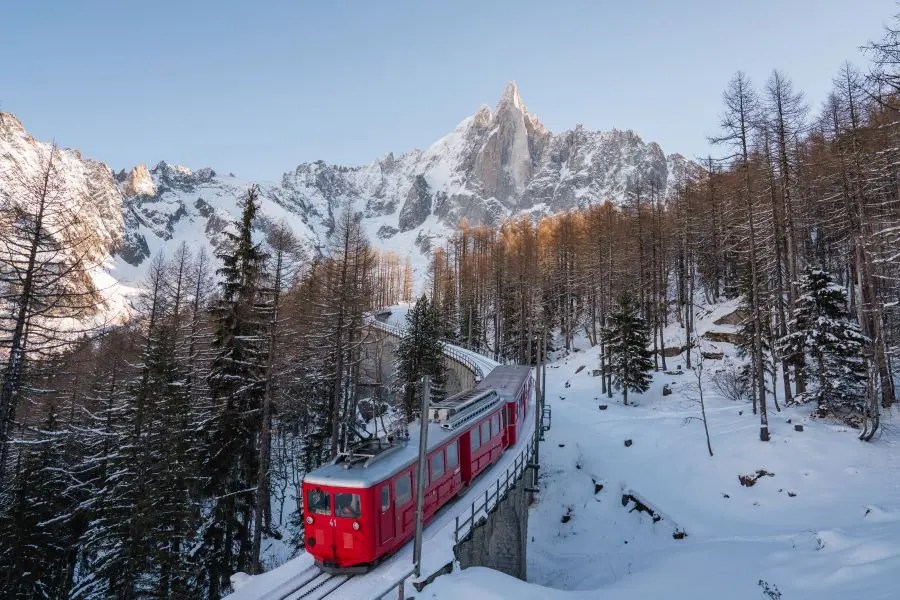
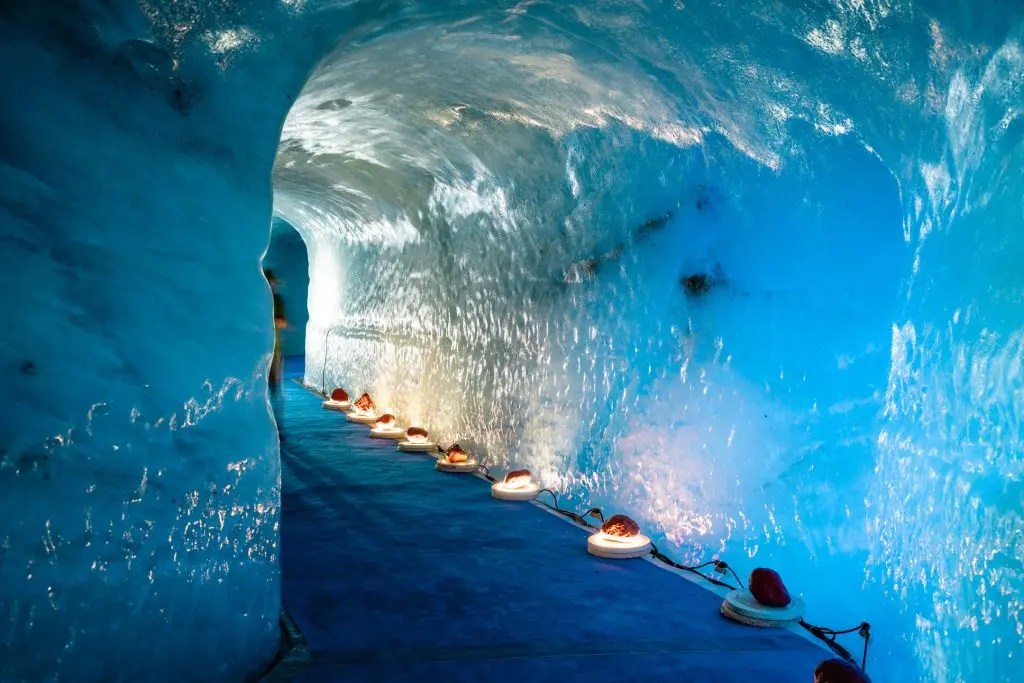
This is the scenic red cogwheel train that leaves directly from Chamonix and takes you up to Montenvers in about 20 minutes. From there, you can see the Mer de Glace, which is the largest glacier in France, visit the Glaciorium, and take the gondola down toward the ice cave.
This is a great option if you want something that still feels very “Chamonix” but is a little slower-paced than skiing. Just plan the timing carefully. The train typically runs every hour, every 30 minutes, or every 20 minutes depending on demand, and there is usually a last departure from Chamonix if you want to visit the ice cave. Also, the ice cave and gondola can close for maintenance, so check the schedule before building this into your itinerary.
Tramway du Mont-Blanc
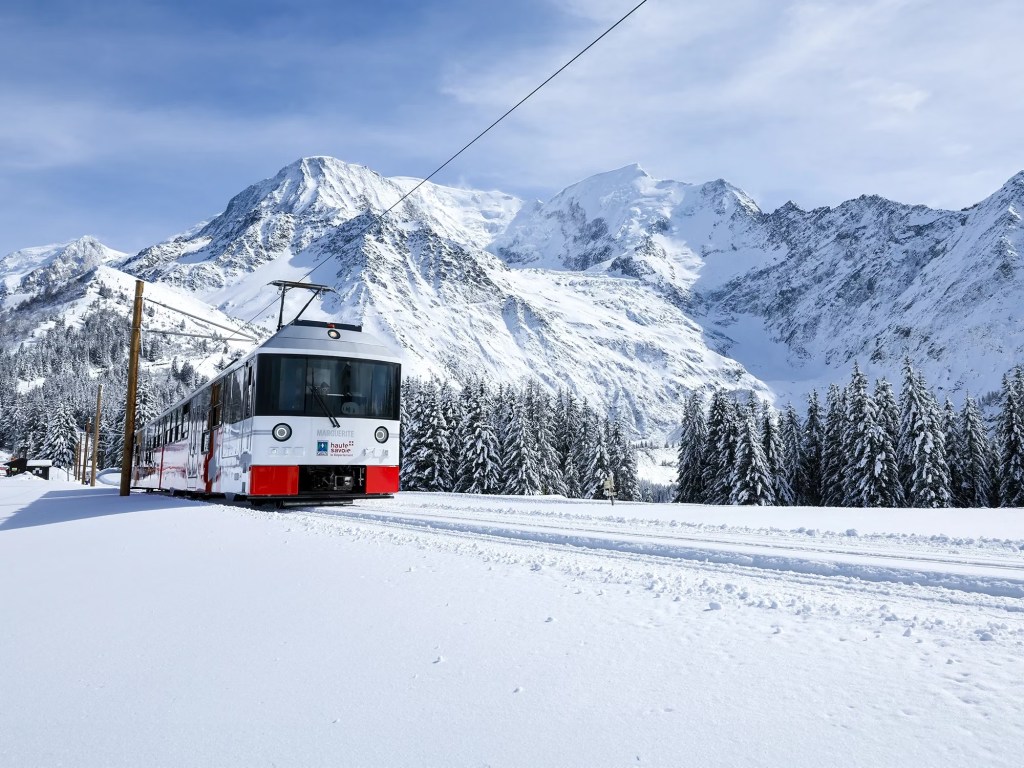
The Tramway du Mont-Blanc is a mountain tram near Saint-Gervais that takes you up the slopes of Mont Blanc and gives you a completely different view of the area. This is a really good option if you want a scenic mountain experience that feels a little quieter.
If you have the Mont Blanc Unlimited Pass in winter, access is included, but you still need to book your date and time slot. Reservations are often required, especially during busy periods, so it’s best to book ahead.
Skyway Monte Bianco
Skyway Monte Bianco is on the Italian side of Mont Blanc, near Courmayeur. It’s a rotating cable car that takes you high into the mountains for panoramic views from the Italian side.
This makes the most sense if you’re already planning a Courmayeur day, because it is not in Chamonix. You’ll need to plan transportation through the Mont Blanc Tunnel, and I would not try to squeeze it in casually unless you have the timing figured out. If you are already going to Courmayeur, though, it could be a really cool add-on because it gives you a totally different perspective of Mont Blanc.
Alpine Coaster (Luge Alpine)
The alpine coaster is also included with the Mont Blanc Unlimited Pass (typically for a limited number of rides depending on your pass duration) and is a fun, quick activity.
It’s located near the Planards area, and you ride down a track built into the mountain while controlling your own speed. It doesn’t take a lot of time, so it’s easy to fit in on a lighter day or after skiing.
Other Things to Do in Chamonix Beyond Skiing & Snowboarding
There is so much more to do here than just ski or snowboard, which is why I really think you need more than a couple of days here.
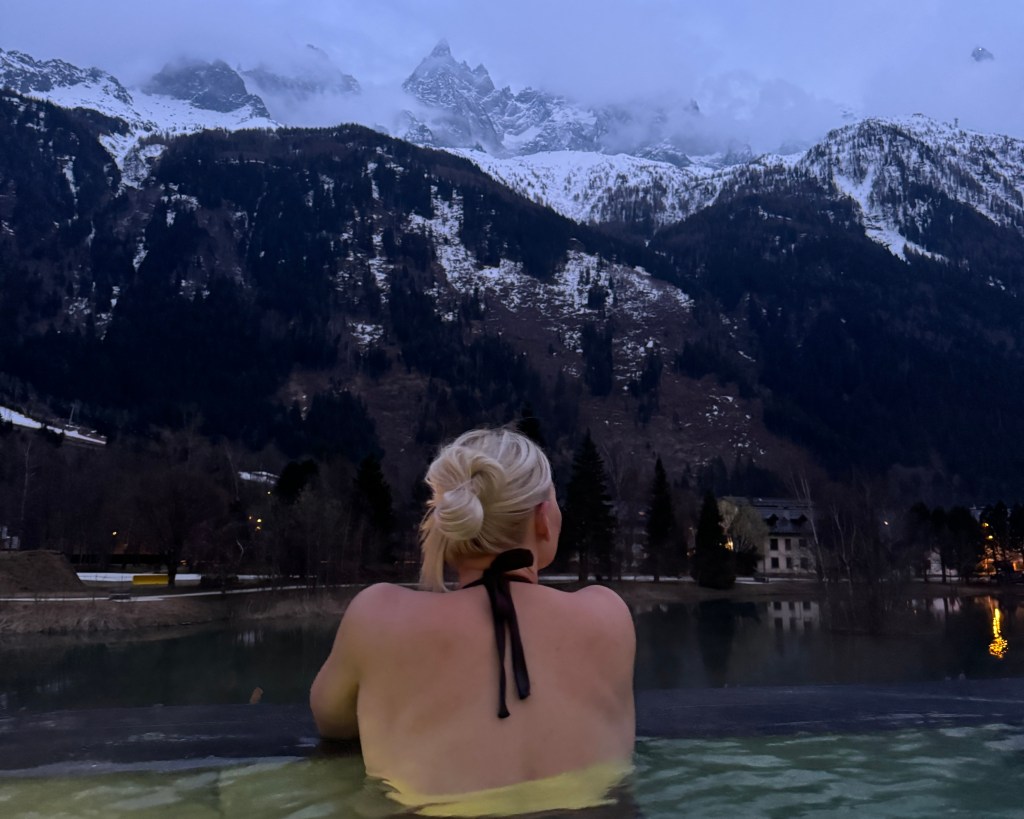
QC Terme Spa
We booked a time at QC Terme Chamonix for $92 per person, and this was such a unique and relaxing experience. We went in the evening and spent about 3 hours here, which felt perfect after a full day of snowboarding. The place is HUGE with a lot of different saunas, pools, and relaxation rooms, and you even get a time slot with unlimited snacks and champagne. I would 100% say it’s worth the money for the experience.
Winter Hiking & Snowshoeing
If you don’t want to ski every day, winter hiking and snowshoeing are a great way to still get outside and enjoy the mountains. There are marked winter walking routes around the valley, and some higher trails may require snowshoes depending on conditions. This is a good option for a lighter day, especially if you want the views without committing to another full ski day.
Paragliding
Paragliding is one of the most popular adventure activities in Chamonix, and you’ll probably see people landing in the valley throughout the day. You go tandem with a guide, so you don’t need experience, but it is still very weather-dependent. If this is something you really want to do, I would book it early in your trip so you have more flexibility if wind or weather causes it to move.
Walking Around Town
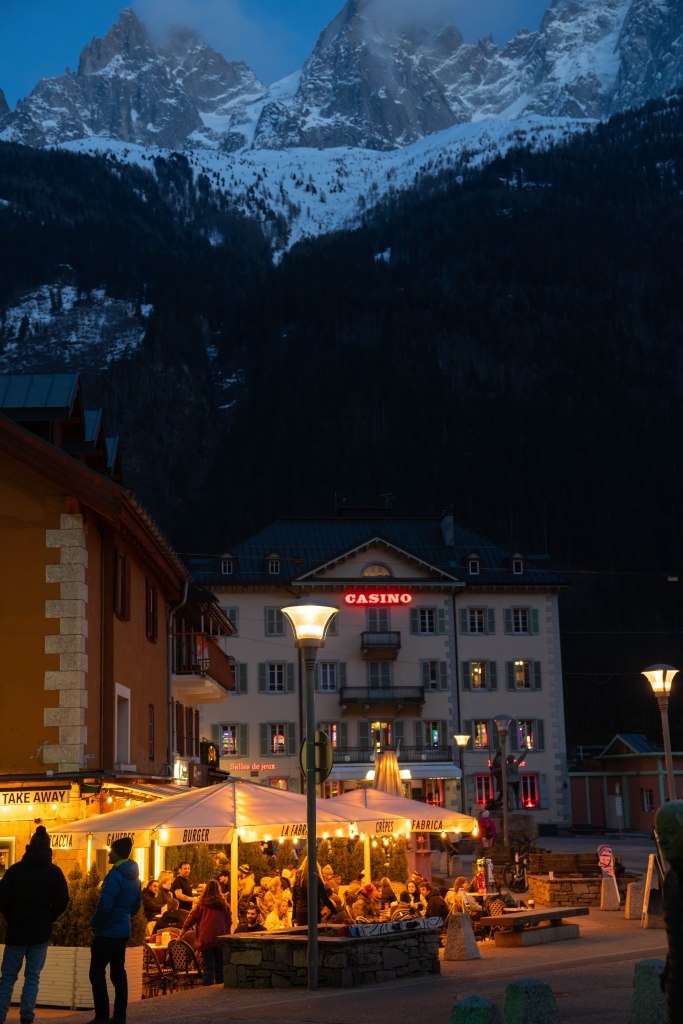
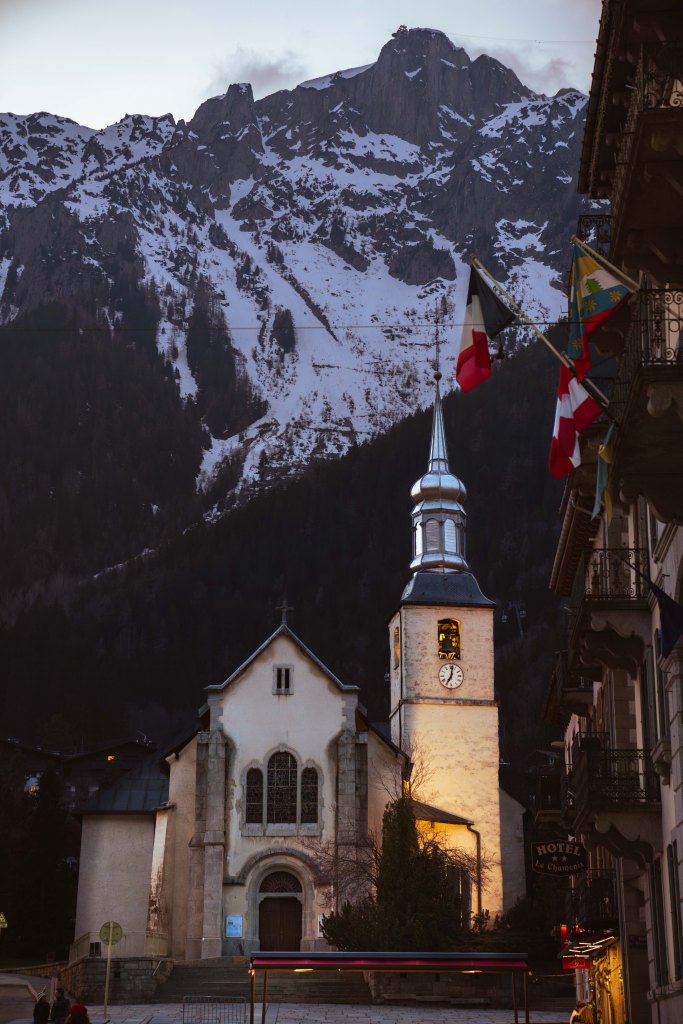
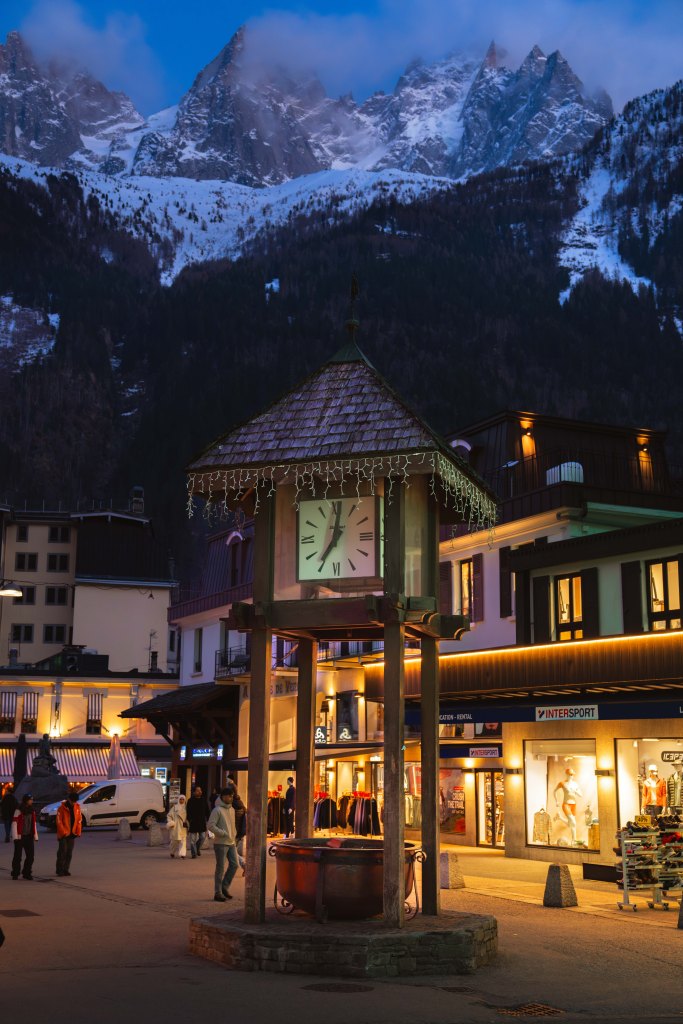
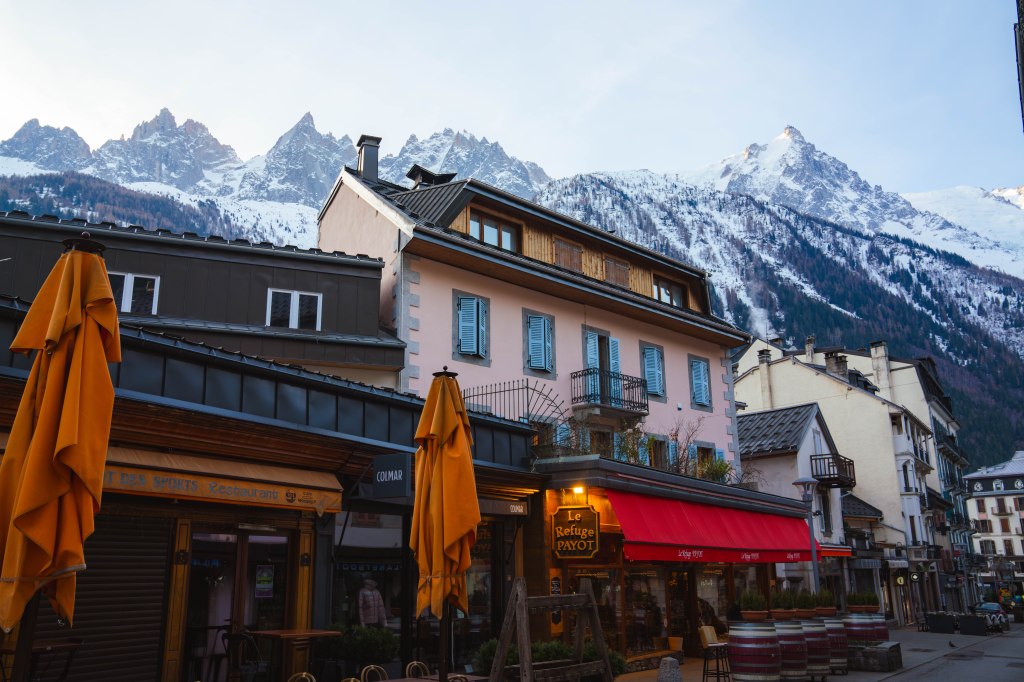
Honestly, just walking around Chamonix is one of the best things to do. The town is full of outdoor shops, cafes, bakeries, restaurants, and mountain views everywhere you look. We spent a lot of time just wandering, grabbing coffee, and popping into places, and it ended up being one of my favorite parts of the trip.
Where to Eat in Chamonix
Here are the spots we went to and would actually go back to. There are a lot of options in Chamonix, but these really stood out to us.
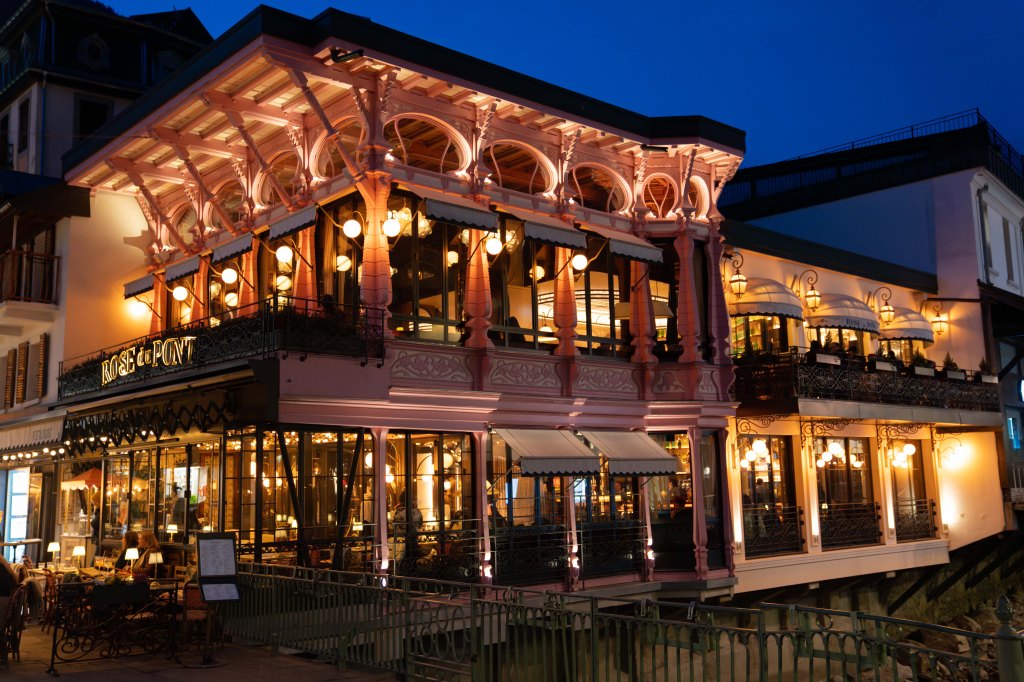
Rose du Pont
This place is popular for a reason. The aesthetic is just beautiful and it’s the perfect spot for coffee and drinks. We also tried the onion soup and it was probably the best one we’ve ever had.
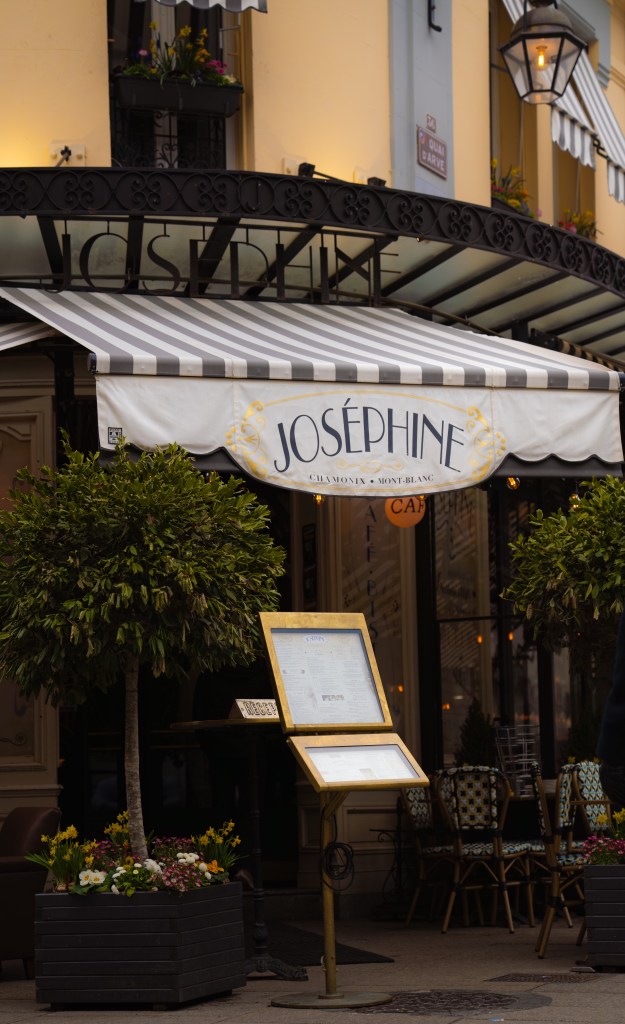
Joséphine
This is another spot that truly lived up to the hype. I’m always skeptical about places that are Instagram-famous but we were blown away by this spot. Not only is it a stunning restaurant with epic views of the mountains, but the food was delicious! The service was also super friendly and great. Definitely a 10/10 restaurant that I would go back to.
Cafe Tartine
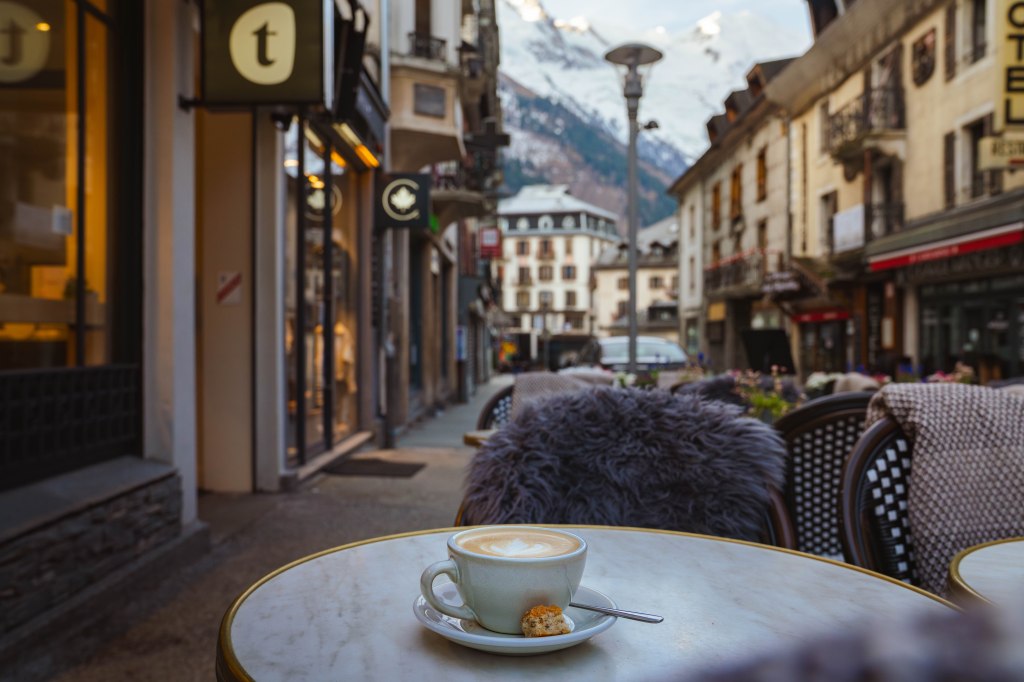
You need to come here for coffee and pastries. Everything we got was amazing, and it’s one of those spots you’ll probably want to go back to more than once.
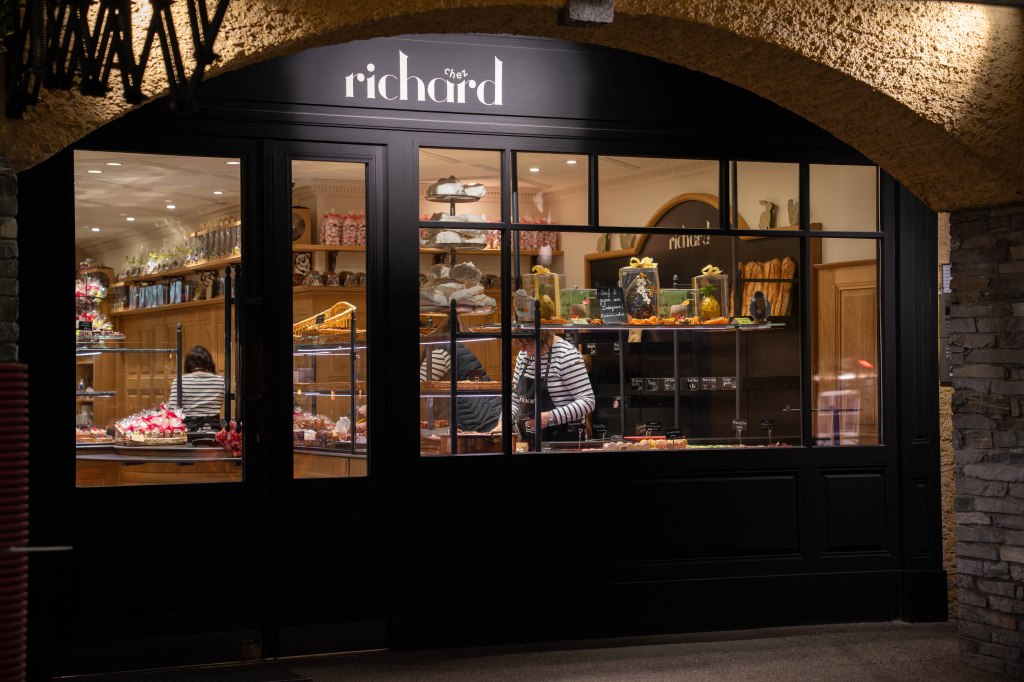
The Richard (bakery)
Another great stop before heading out on your adventures. The pain au chocolat here was one of the best I had in France.
Stories
A solid option if you’re craving tacos, and it’s one of the few places that stays open later.
Le Rond Point
We came here for fondue and it was exactly what you want after a day in the mountains. Delicious, great prices and a fun experience!
La Mer De Glaces
Amazing gelato! Treat yourself to this!
One important thing to know:
On weekdays, if things start to slow down, a lot of restaurants will close earlier than you expect. Some places might say they’re open until midnight, but will actually close closer to 10pm. We learned this the hard way while working remote one Monday night. We tried to find dinner around 10:30pm and almost everything was closed.
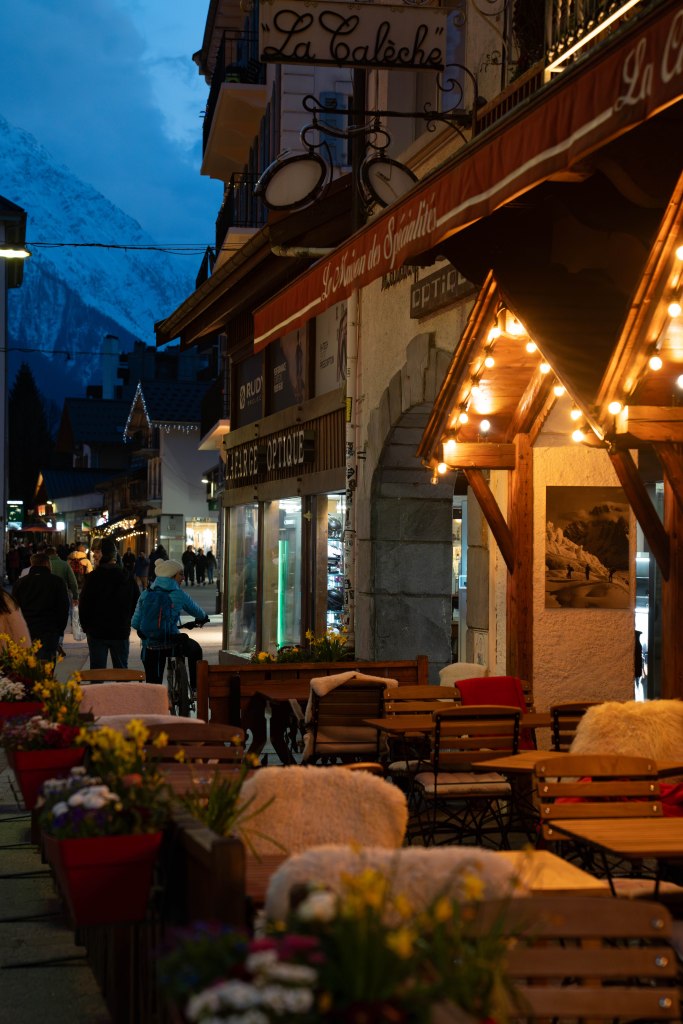
The one spot that was open late was Brasserie Le National, and we ended up having a really good meal there. So it worked out, but it definitely taught us to plan dinner at a normal time instead of assuming things would stay open late.
Costs
- Round Trip Flights (Atlanta → Geneva): 37,500 points + $328 per person
- Round Trip Bus transfer from Geneva to Chamonix: $44 per person
- Hotel (3 nights): $625
- Mont Blanc Unlimited Pass (2 days): $189 per person
- Bus to Courmayeur, Italy: $35 per person
Extras
- QC Terme Spa: $92.50 per person
- Holafly eSIM: $43 per person
- Travel Insurance (for both Alec and I) through World Nomads for our entire France Snowboarding trip for 13 days: $218
Food:
I didn’t include exact costs here since it can vary a lot depending on where you eat and how much you’re ordering, but to give you a general idea, we had three nicer dinners and they were all around $100 total for two entrees and a few cocktails. There are plenty of more affordable options too if you’re mixing in bakeries, cafes, or quick meals.
One thing to note, everywhere we went accepted card and tap to pay, so you really don’t need to worry about carrying cash, but it never hurts to always have some on hand.
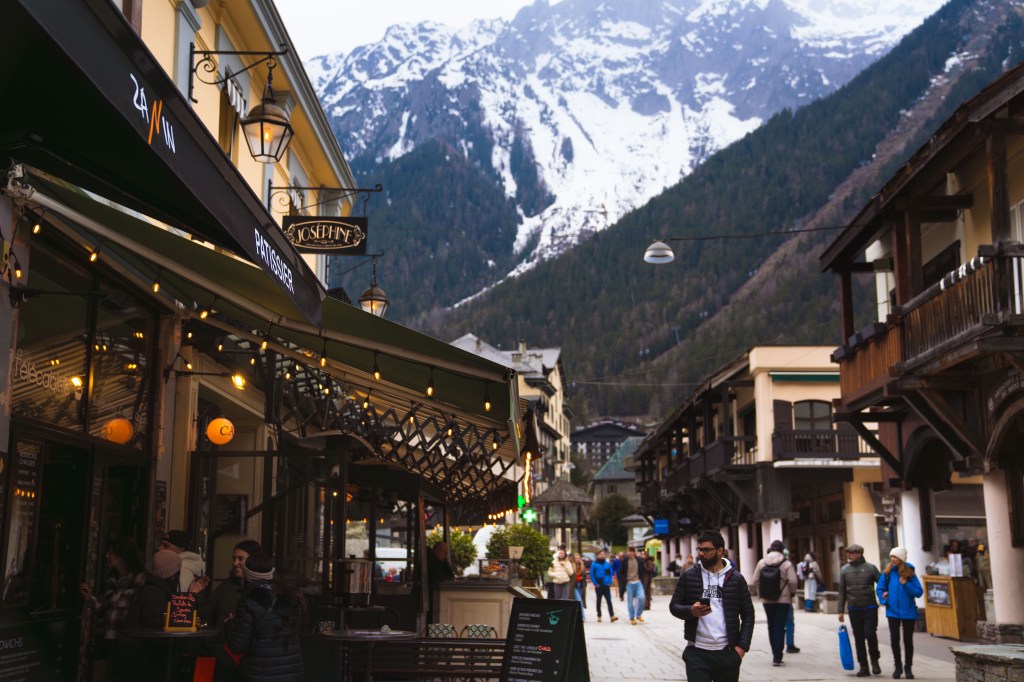
My honest thoughts:
This trip to Chamonix was part of a bigger snowboarding trip in France, but in hindsight, I definitely wish we had more time here. 2 and a half days was not nearly enough time to explore everything Chamonix has to offer. This is truly an adventure lover’s paradise.
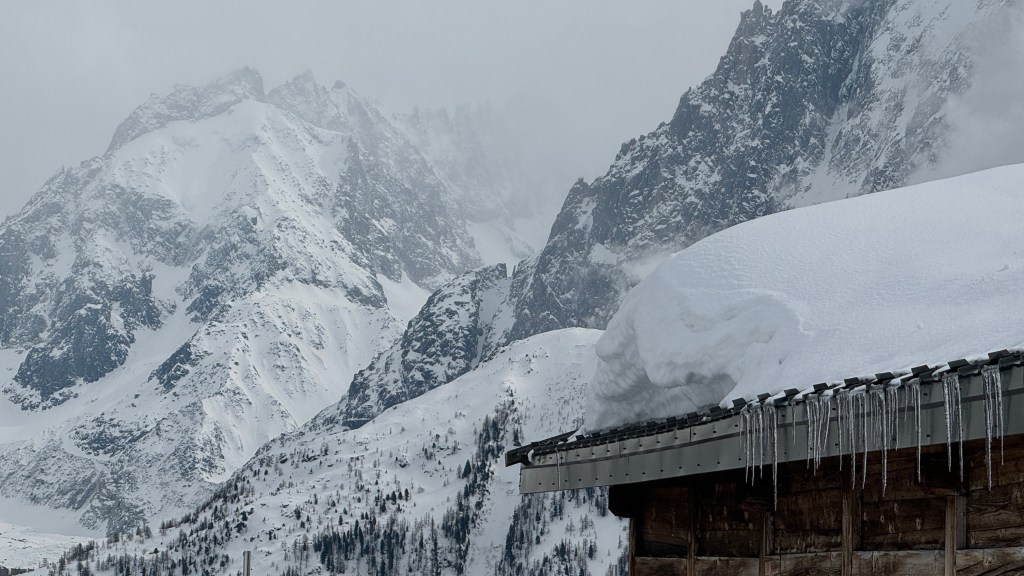
Quick funny story, when we were in the gondola heading up to Brévent, Alec struck up a conversation with the guy sitting in there with us. He told us he was originally from Paris but decided to move here full time a few years ago. Alec asked him if he does any mountain biking in the summer and he said, no he was a trail runner. And then as we were going up this mountain in the gondola, he casually says “yeah, I run up this on my lunch break.”
And that pretty much sums up the vibe here.
From all the extreme outdoor stores, to the people who live here and the type of travelers Chamonix attracts, everything is centered around adventure and being outside.
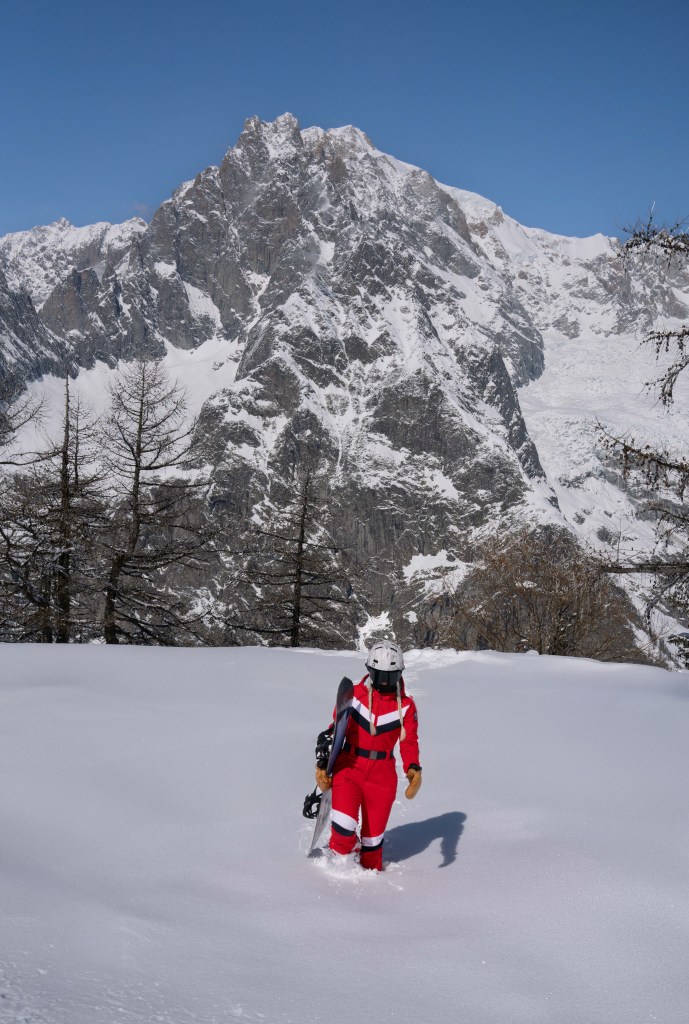
Ideally, I would recommend spending about 5 to 7 days here depending on everything you want to do. That would give you enough time to explore multiple ski areas, spend a full day in Courmayeur, mix in some of the non-ski experiences, and actually enjoy the town without feeling rushed.
So is Chamonix worth it?
If you’re looking for a winter destination that combines adventure, unreal scenery, great food, and a really fun mountain town atmosphere, I think Chamonix is one of the best places you can go.
It does take a little more planning than a typical ski trip, but once you understand how everything works, it’s absolutely worth it!
And it definitely feels like one of those places you could come back to over and over and never get bored.


Leave a Reply